The last quarter of 2022 was an extremely busy time for us. We spent November and December travelling in Bolivia, Peru and Argentina ( we will post some highlights from those experiences later). We arrived back in the US in mid December to spend the holidays with our family in NYC. In January, we took a break from the cold and dreariness of NYC to visit Spain and Portugal.
We arrived back in Seattle primarily for a legal case against the University of Washington. Although the outcome was not in my favor, I remain convinced I achieved an important goal that brought to the public light some personnel practices at the institution.
Bolivia, like its neighbor Paraguay, is a landlocked country in South America. It shares borders with Argentina, Brazil, Chile, Paraguay, and Peru. The two most populous cities in Bolivia are Santa Cruz de la Sierra, a large city located in the eastern tropical lowlands and La Paz, a mountainous city located on the altiplano. One of the most striking observation for me in Bolivia was the drastic change in climate from Santa Cruz to La Paz. One moment we were uncomfortably hot in the humid lowlands, few hours later we were freezing in the dry cold of La Paz Department.

Transportation across the city of La Paz is challenging. There are no obvious logic or reason to the manner of driving especially among the cars and taxis. One can easily get bogged down in this type of traffic for hours….not desirable with limited time. An amazing array of cable cars can be seen dotting the entire cityscape to alleviate this transportation nightmare. This organized collection of cable cars forms the backbone of an urban transport system affectionately named “Mi Teleferico“. For a few dollars, you can enjoy some breathtaking sights from up high. This is a delightful way to view the snow caped mountains and undulating and alluring terrain of La Paz city. Although, to experience the array of tastes, scents and hospitality of the people in this awesome city, you must do some walking around in the neighborhoods.
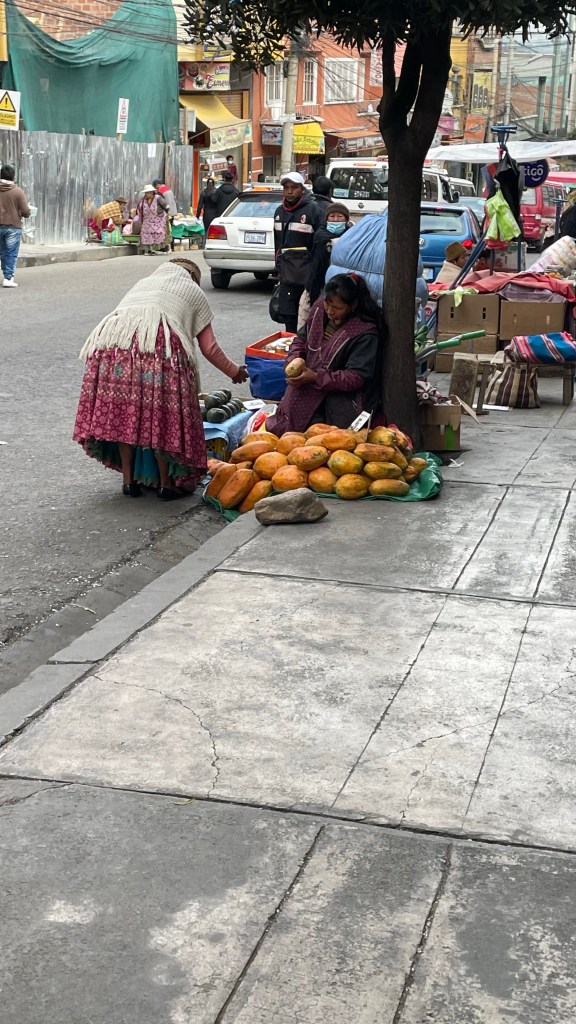
La Paz has a rich and eclectic mix of peoples, customs and cultures and this represent the multiethnic and multicultural diversity within Bolivia. Although a large number of Bolivians have European ancestry, the majority of Bolivians have indigenous ancestry and self identify as mestizo, a mixture of Hispanic and Amerindian cultures. The colorful dresses of the Quechua and Aymara are dominant in the countryside and high altitude places such as Copacabana, Bolivia, and Isla del Sol in Lake Titicaca. This makes Bolivia an interesting place to explore and learn about some of the oldest cultures in the west.




Tips for visitors to Bolivia
- Travel everywhere with bottled water for drinking and brushing your teeth.
- If you plan to visit the high cities of La Paz, Copacabana or Isla De Sol in Lake Titicaca be prepared with medications to cope with the high elevations ( altitude sickness).
- Road transport in Bolivia is challenging, plan ahead and be flexible with your time. If time is limited you can get a high up view from the cable cars in La Paz.
- US citizens are required to get a entry visa to Bolivia. The cost of this visa is US$160, valid for 10 years. You can get the visa upon arrival to any port of entry.
- Everyone needs to show an exit ticket (bus/air) from Bolivia upon arrival to a port of entry.
 Nuevo Nomads
So cool to read all your experiences in Bolivia! It’s great that you are exploring South America in depth, because we have lots of amazing destinations here that are worth a visit 🙂
LikeLike