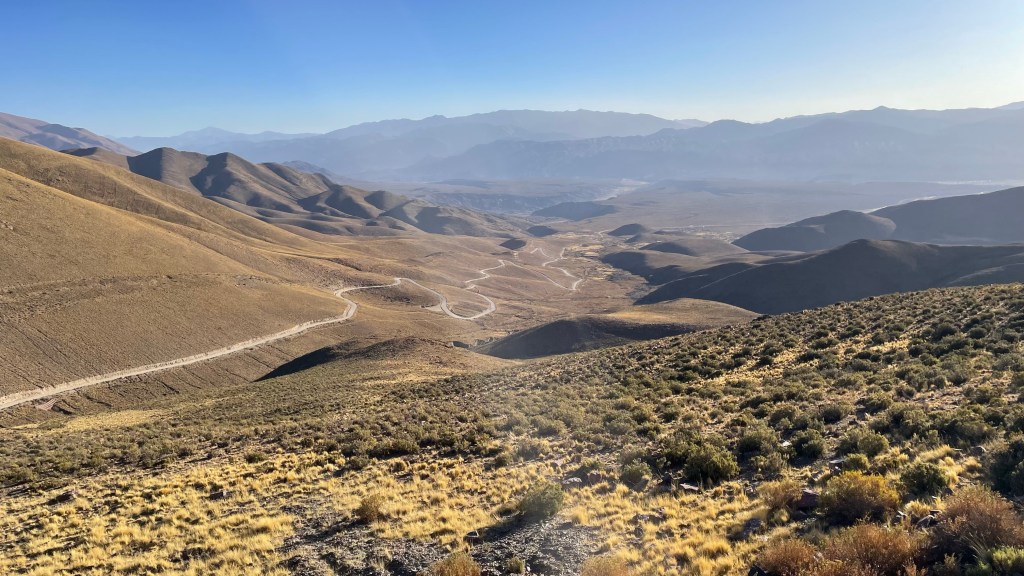
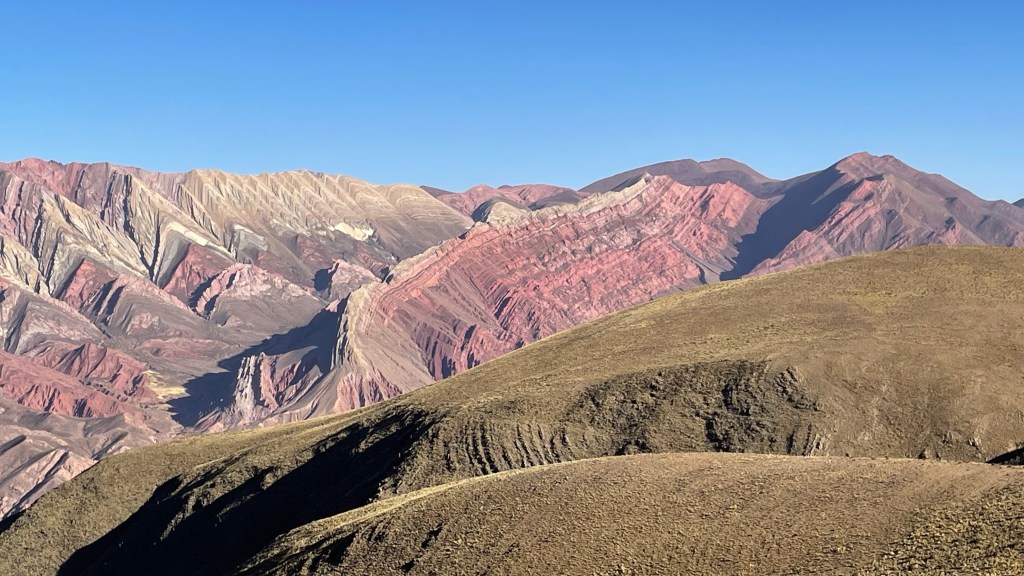
Jujuy is a northwest Argentina province with remarkable landscapes. On this trip, We followed Route 9 headed toward Purmamarca and the Mirador de Hornocal, also known as ‘the mountain of 14 colors’. To get there, we negotiated a 25 km stretch of gravel road past Humahuaca. This road reaches Hornocal and, continues to other settlements deep in the hills.
When we finally arrived at Hornocal, we were at 4350 meters above sea level, 14271 feet. You could immediately feel the effects of altitude as the short walk to the lookout point was strained, a combination of altitude and cold winds. Notwithstanding, It was an unforgettable experience. The presence of nature in its overwhelming magnificence was difficult to ignore.
We continued our journey into Purmamarca, a small town situated off Route 52, which reaches all the way to the Chilean border. Purmamarca sits right next to very colorful hills, and hosts many tourists from all over the country and the world. The market around the main square bustles every day as the tour buses comes through. The town is the gateway to other parts of the Altiplano, like the Salinas Grandes.
Driving from Purmamarca to the Salinas Grandes was an exiting day trip. The road is in great condition, the landscapes change constantly, and you get the feeling you are entering a very special area. There are villages at the edge of the Salinas, and the people help guide your visit unto the Salinas.
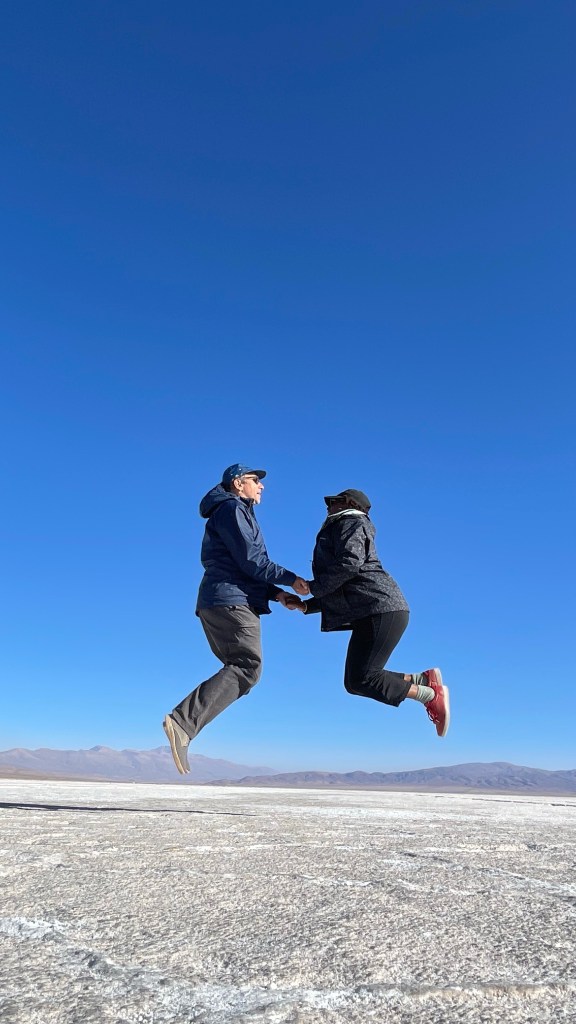
The clear skies and bright white salt provide a contrast that is unique and exciting to experience. To see salt blocks being used for construction was unexpected. A major trade road crosses the salt flats and connects to the Pacific port of Antofagasta in Chile and on to Paraguay and Brazil. The large trucks that traverse this region provide a small glimpse into the complexities of moving goods between countries.
TIPS
Visit Juan Chani at El Meson in Purmamarca. You will have a great meal in a welcoming space.
Mirador de Hornocal closes at 6pm. Plan your trip accordingly. The road is best driven with daylight.
You will need a guide to enter Salinas Grandes. They are knowledgeable and happy to take your pictures. Cost of entry is $1500 argentine pesos per car ( September 2022). Well worth it!.
Route 52 is in great shape. A true joy to drive it at sunset. Until next time.
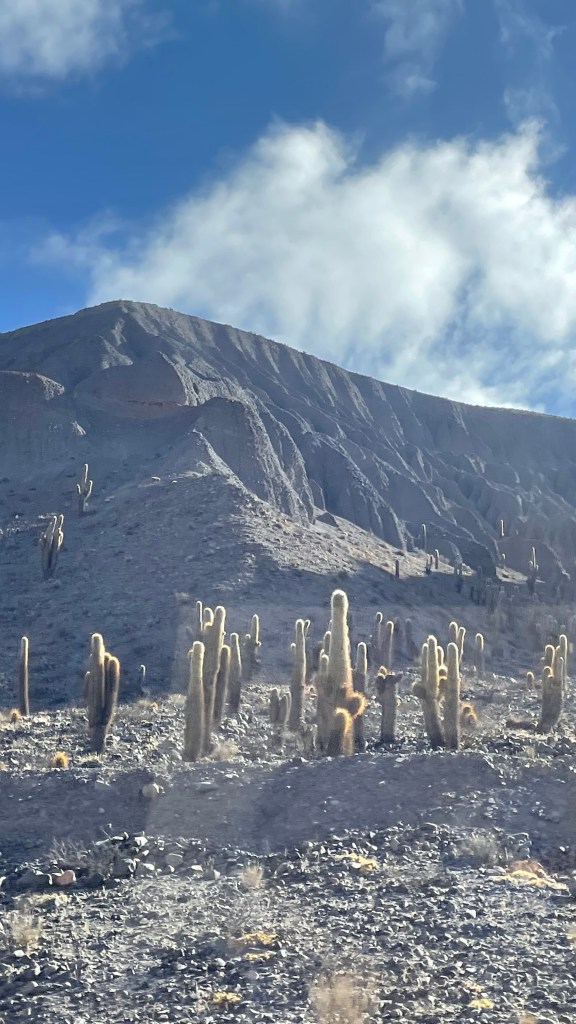
We never could imagine being evacuated at nearly 4000meters. It is no fun but this actually happened to us when we went for a trip on el tren a las Nubes-train to the clouds. After a very long bus trip by bus from the station in Salta we arrived at the San Antonio de los cobres. A very small town in northwest Argentina located at a high elevation (3,775meters or 12,385 feet above sea level. Instead of trees. the hills are dotted with large cacti and some shrubs.
As we traveled up the mountains, we saw small stalls with many types of clothing and goods. Very popular are the Llama wool sweaters, coca leaves and coca candies. As we approached the high elevation we began to share our own coca leaves as we were told this would be helpful in preventing altitude sickness. Obediently, everyone could be seen folding up the few coca leaves and inserting this roll of leaves between the teeth and the jaw as instructed…”don’t chew on it we were told” chewing. we understood could upset our stomach.
Car by car and excitedly we boarded this lovely little train. The guide in our car was amicable and knowledgeable about the area. She pointed out for us the most picturesque and historically significant places ( light the blacked soils of the volcano that erupted 6000 yrs ago. After about 45 minutes the train suddenly stopped, we were told some Llamas were on the track, then that something need to fixed on the locomotive so we waited and waited. After more than an hour we were told we needed to be evacuated. Passengers were concerned and even became agitated, there were elderly people and a few children on the train.
As we were being evacuated many people became ill with breathing problems. Some even passed out. Luckily, there was a trained nurse on the train so the most ill were treated and given oxygen. That walk to the evacuation vehicle was very short, but it felt like the longest and most difficult walk ever. A million thanks to the wonderful people of San Antonio de los Cobres. They gather up their vehicles and came out to help us down from the mountains to the waiting buses.
Tips for altitude travel in Argentina
1. Be prepared for falling ill at anytime
2. Travel with some type of medicine for altitude sickness
3. Coca leaves is easily available in some markets, srojchi pills can be bought in any Kiosk
4. At altitude walk slowly and breathe deeply
5. Do not take risks, know your body and don’t over exert yourself to get the views and pictures.
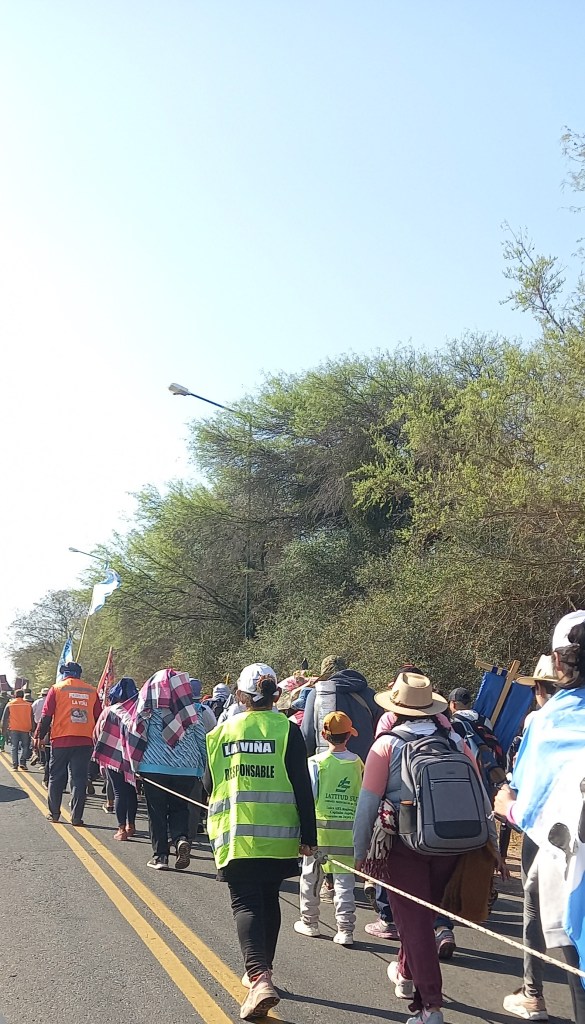
Leaving Cafayate and heading to Purmamarca in Jujuy, we came upon a large number of people heading towards Salta. People were walking and riding bicycles, in large groups from as far as 400 km from Salta.
We understood the people started walking from September 1, to arrive in Salta on September 15 for the ‘Señor y Virgen Del Milagro’ pilgrimage. It is a well organized pilgrimage with police providing escort on the roads. Along the way people were supplying food and drink, with a spirit pungent with faith and community. We came across many different groups along our route, both in Route 68 and in Route 9 in the yungas, which is a twisting section of the route connecting Salta and Jujuy.
Pilgrims on Route 68, in a procession to Salta. Some walked hundred of kilometers.
Salta is the land of General Martin Guemes. His statue overlooks the city from the foothills of San Bernardo, which can be reached by car, walking or cable car.
The province of Salta has a variety of landscapes, climates, and people. From the yungas (forests) to the Andes mountains, you can find several different landscapes within a few hours’ drive.
After a few days in Salta city, with its wonderful squares, churches, and lively atmosphere, we set out on a drive south to Rosario de la Frontera, a town that feels like it is at the frontier.
The main activity in the area is cattle ranching, with some grain being grown during the rainy season.
El Sunchal and La Yunga, Salta
On the way to El SunchalEl Sunchalbefore sunriseMaking chicken feedEl Sunchal
After we met our guide, we drive for over an hour to the trailhead, where we met Ignacio, one of our hosts. Ignacio loaded our gear on a horse, and we set out on our walk.
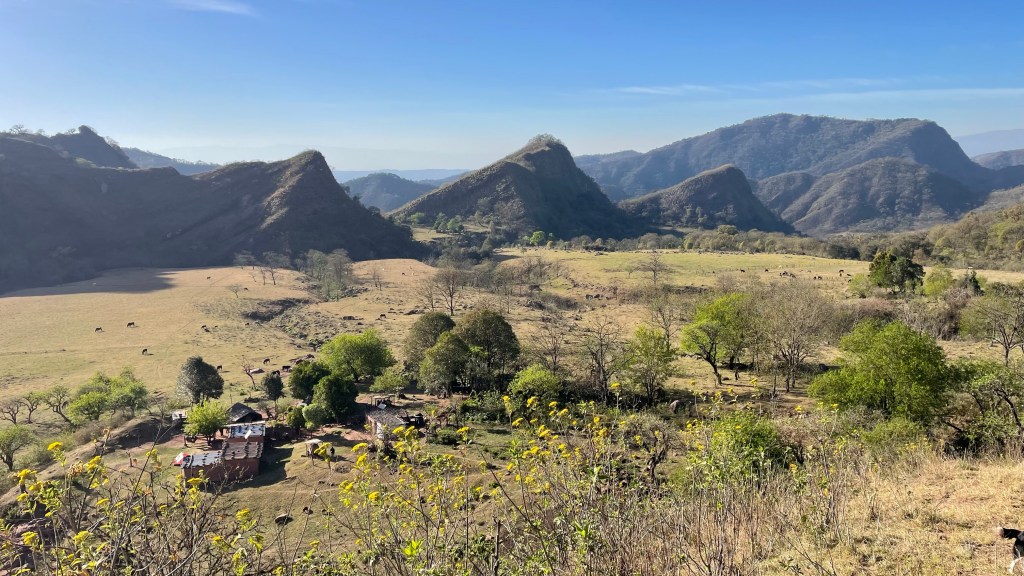
We walked into the yunga, an amazing ecosystem with many different trees, huge ferns, and calming air. We walked for hours, following a well-worn trail that is used by the people that live in the area. These people are part of the Diaguitas tribe who settled in the area in the 1800s, seeking peace and quiet.
After 4 hours and 10 km (about 6 miles), we arrived at our destination: El Sunchal. This settlement is home to a few families, part of the Sulca family.
Our hosts, Jesus, Chacho, and Ignacio, were ready for us, with the kettle full of water, and the fire roaring. They live in a place that could be in a picture book, with streams, pasture, and open skies. It is hard to describe the peace that surrounds the place.
We hiked to a waterfall the next day, an all-day adventure that took us through different ecosystems, from forest to riverside to deep canyons.
And then, that night, the moon showed us that new weather was coming. We got hit by a massive windstorm, a hot wind called Zonda. This wind threatened to collapse our tent and gave us no respite for the whole night and the next morning. You could hear it coming like a freight train, and it will hit us and blow in the sides of the tent.
We walked out, another 10 km. Our reward was a stop at Las Termas de Rosario, a hot springs resort founded in 1880. This resort has 9 different thermal waters, giving us a unique chance to soak our tired bodies for a bit. After a mandatory blood pressure check (never had to do that before going into a hot spring), we were taken to a tiny, private bath with 5 pipes, each with a different temperature of water. Each turn is for 15 minutes of soaking, then 15 minutes of resting. I thought it would not be enough, but after 10 minutes I was melting, it was so warm and intense, totally worth it.
We set out on a 3+ hour drive to our next destination: Tafi del Valle in Tucuman. To get there, we had to drive south to the capital city of Tucuman, then headed west into Tafi.
There was a long drive into the mountains, crossing from the plains into the lush hills, turn after long turn in the dark. We saw a sea of lights, spread out in front of us.
At last, we arrived in Tafi.
Tafi Tucuman
Tafi is a small tourist town, encircled by mountains with a dam in its backyard. The air was cold and hazy after the big Zonda storm.
We followed the recommendation of Leonardo, a Brazilian travel guide we met in Salta, and went for lunch to Wasi Kusi. Adrian, the host and owner, took care of us with great food and recommendations for places to visit and stay.
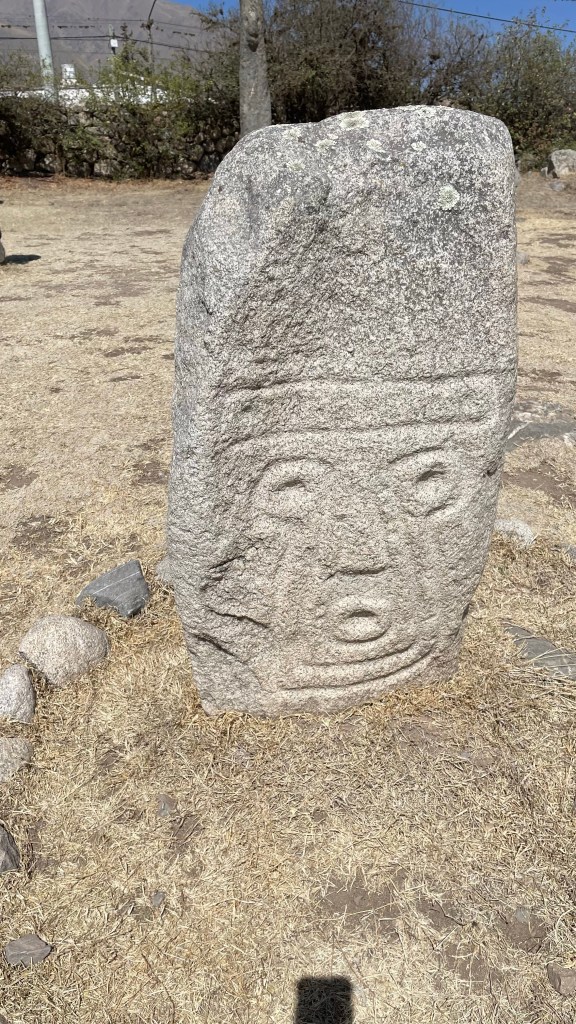
We visited the archeological site of Los Menhires in El Mollar, and the Los Alisos waterfall in El Rincon. We highly recommend a visit to both.
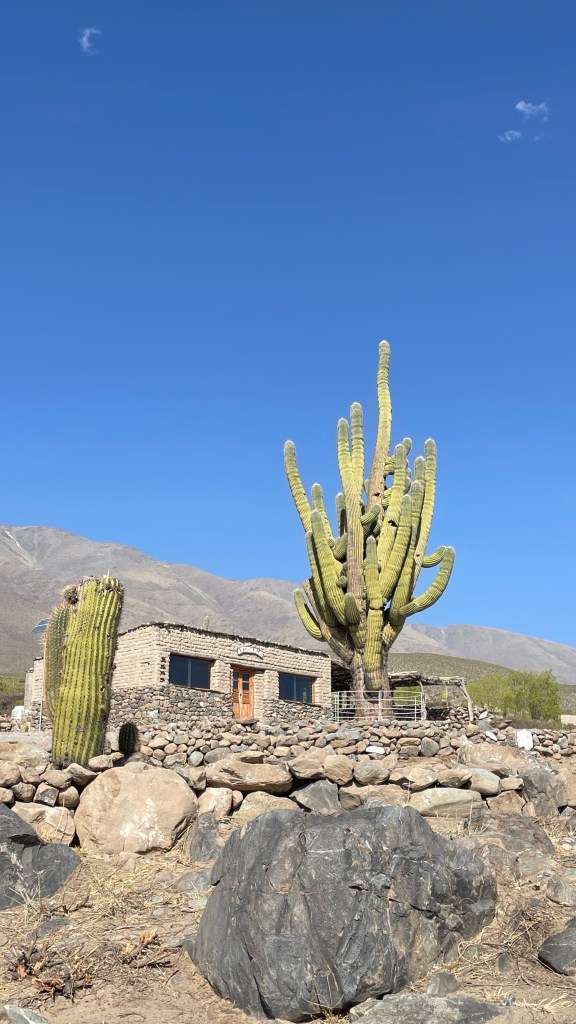
Wasi KusiLos MenhiresLos Alisos WaterfallEl Mollar from TafiGrandpa cactus
Museo Pachamama, Amaicha del Valle, Salta
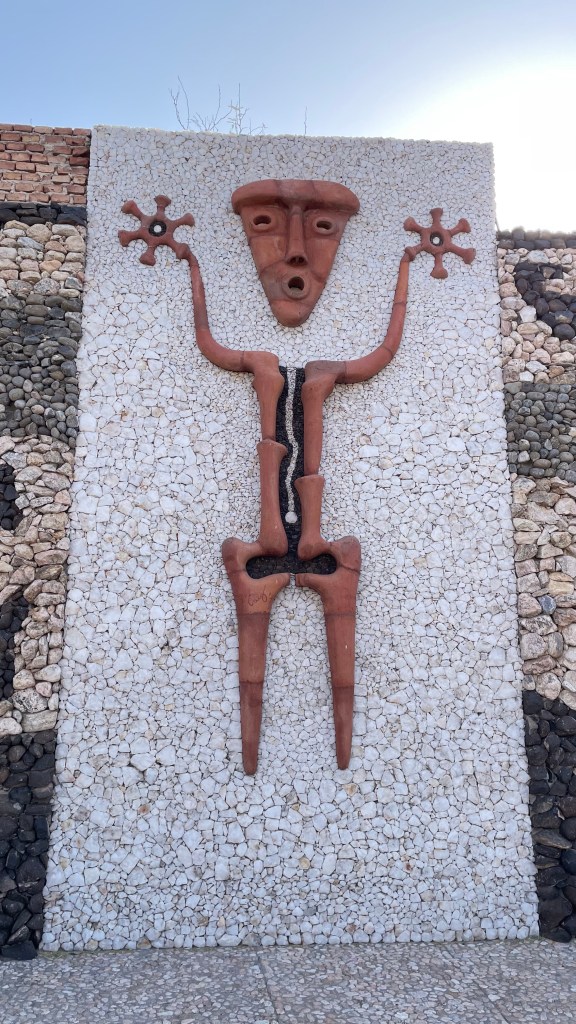
Wow! This is such an unexpected find. We had to stop. It was well worth it. So many works of art by Hector Cruz with local stones and other materials highlight key elements of Pachamama, the Goddess of the Earth and related deities, Inti (Sun) and Quilla (Moon).
ShamanPachamama
Cafayate, Salta
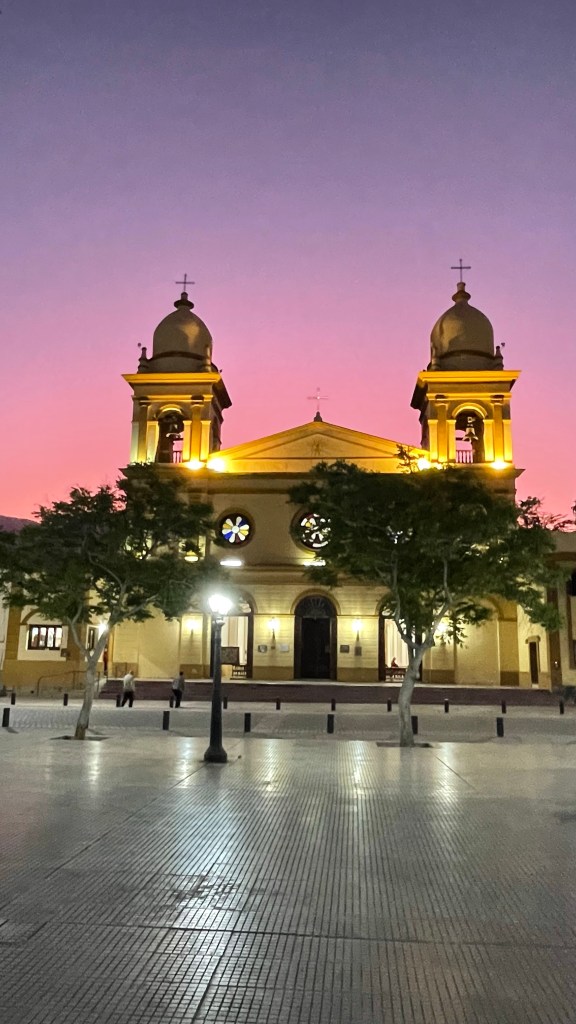
A couple hours’ drive from Amaicha del Valle, on route 40, we arrived in Cafayate, the heart of the wine country in Salta. This small town is lively, with a beautiful central square, surrounded by restaurants, bars, and an imposing church.
We visited a couple of wineries by walking from our excellent hotel, Portal del Santo. Damian and Cristian hosted us at Portal, and treated us like family, with a clean and warm room and a delicious breakfast.
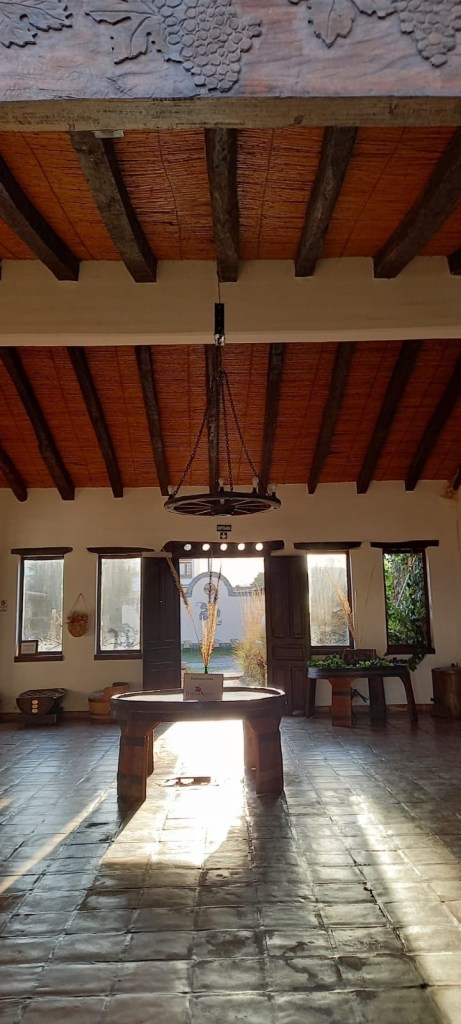
Portal del SantoNanni WineryCafayate ChurchCafayate’s chruch, main square
Route 68: Los Colorados, Amphiteather, and Devils’ throat
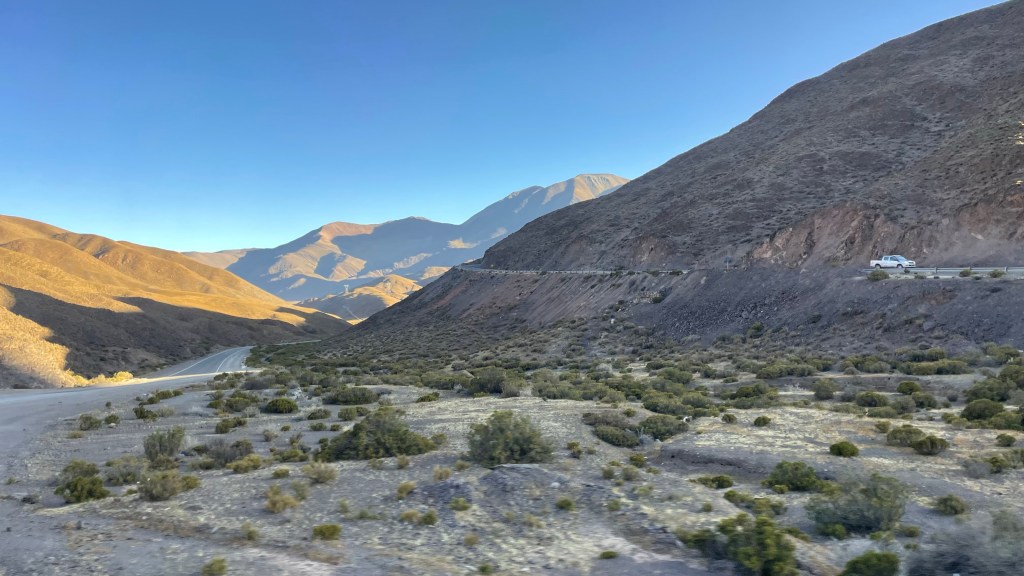
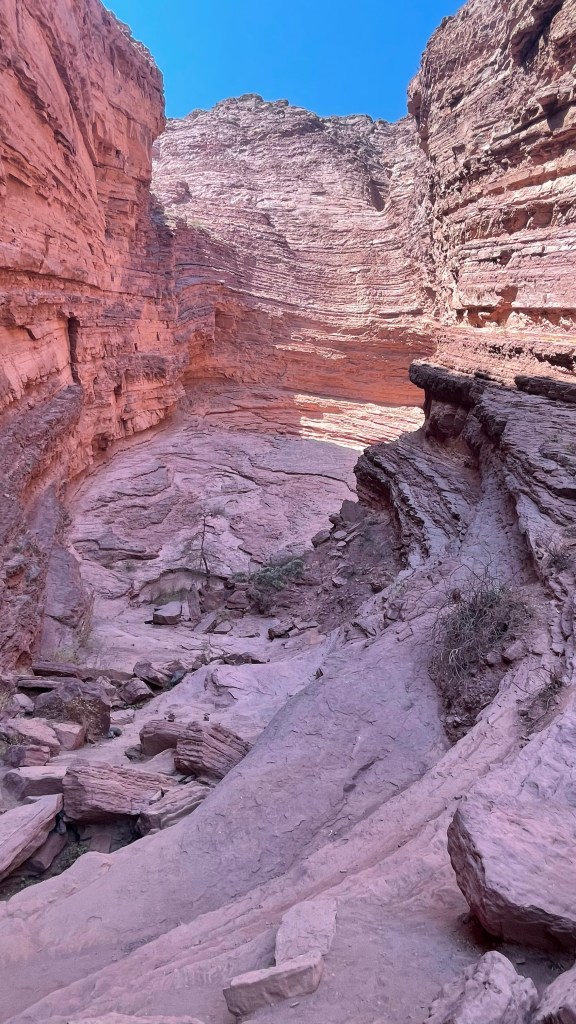
Leaving Cafayate, we took scenic Route 68 to head north. This road is a collection of landscapes, with soaring mountains, carved-out valleys, and a river that brings greens to the midst of towering mountains.
There are three stops that are a must, easy to access, and well worth it.
In the past, I could not have imagined myself on a 15 hours bus trip to anywhere. Last month, we did just this travelling from Mendoza to Buenos Aires. We settled on bus because our visitors (my sister and spouse) insisted on seeing the great Pampas of Argentina. To satisfy her visions of countless cows, big open blue skies, and grasses stretching miles to the horizon, we packed lunch, bought pop corn and head out in our top-of-the-coach seats to see the Pampas and Buenos Aires.
Buenos Aires, Argentina
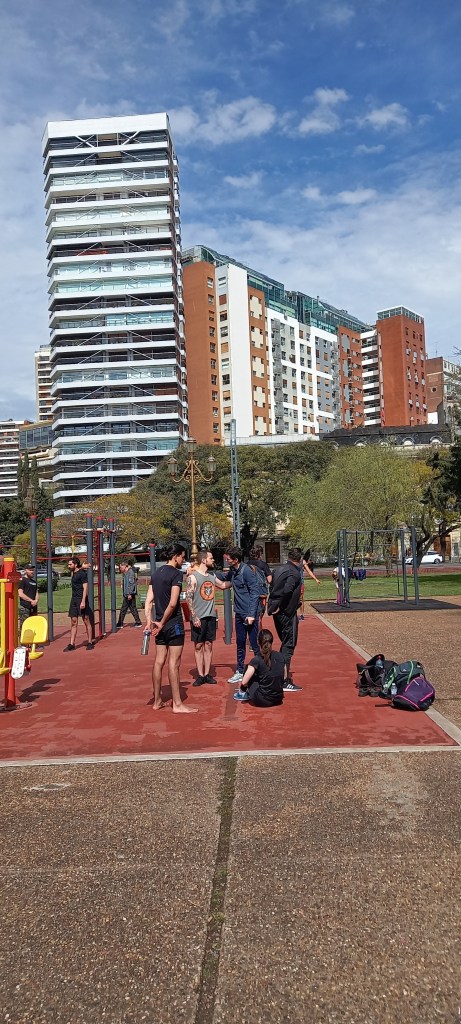
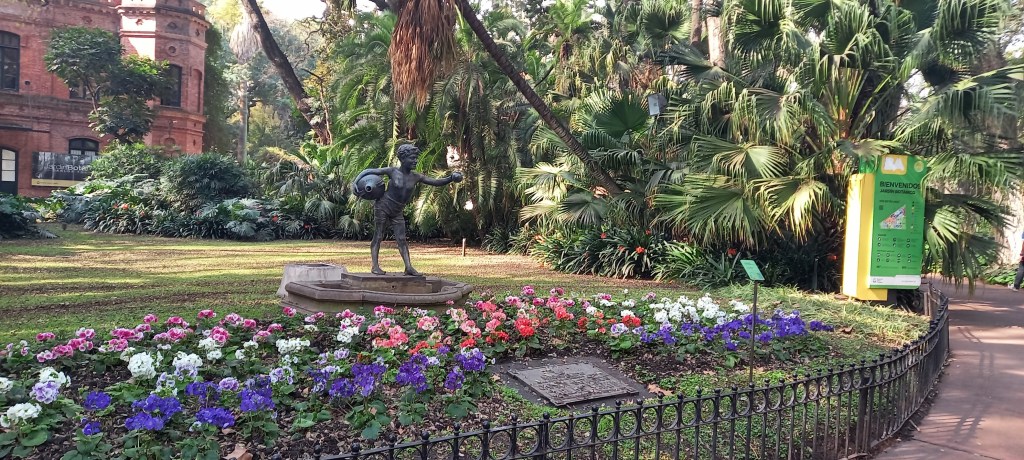
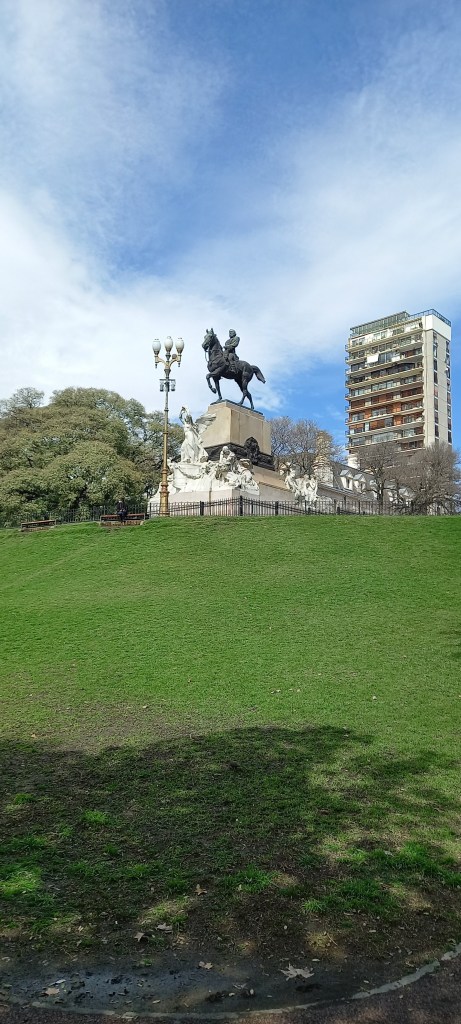
Morning exercises in neighborhood park Buenos AiresHistorical monument on display @ UBA Law schoolBotanical Gardens, Buenos AiresMerienda, tea and wine Buenos Aires Monument of Bartolome Mitre, Avenida del Libertador y AgueroDaily blooming, floralis Generica Buenos Aires
The actual experience was different than imagined. We mostly slept, saw few cattle, few trees with mostly foggy vistas as we transitioned in and out of sleep. Lacking of sleep, and with tired rumps , we finally arrived to the ever bustling and energetic Buenos Aires city. Rested and refreshed we were delighted and ready to indulged in a few days of walking, sightseeing and eating way too much. Before leaving, we arranged a day trip to experience the quiet and charm of Colonial del Sacramento in Uruguay. The 27 miles and 11/2 hr. crossing of the Rio de la Plata by boat was uneventful. In Colonia, we spent a fun and exciting day sightseeing in our rented golf cart…it was an unusual and exhilarating experience.
Colonia del Sacramento, Uruguay
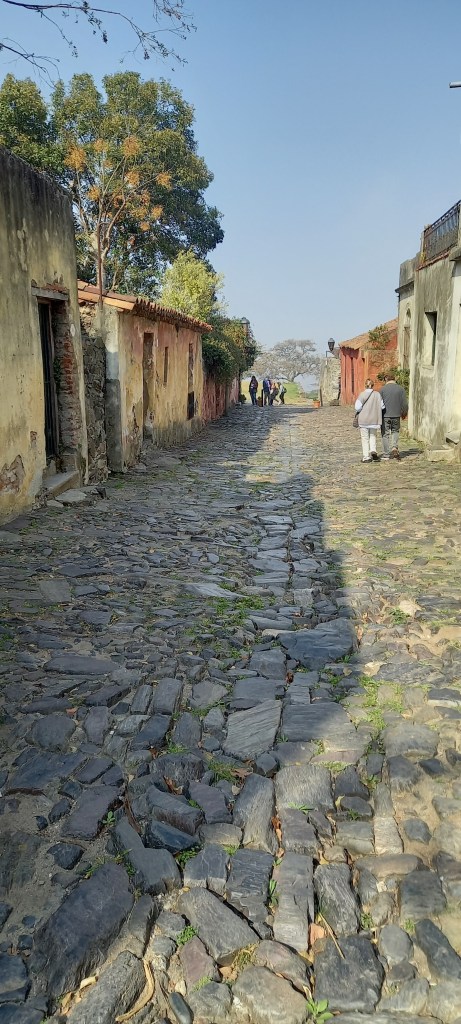
Historic Church in Colonia, UruguayOld Portuguese street in Colonia de Sacramento, Uruguay Afternoon tea, Colonia, Uruguay
We returned to Mendoza by air and after seeing our visitors off, embarked on a second 17 hours bus trip from Mendoza to Salta. Salta province is located in the lesser known northwest corner of Argentina, and it is famous for its culinary delights, nightlife and high altitude white aromatic Torrontes wine.
Salta, Argentina
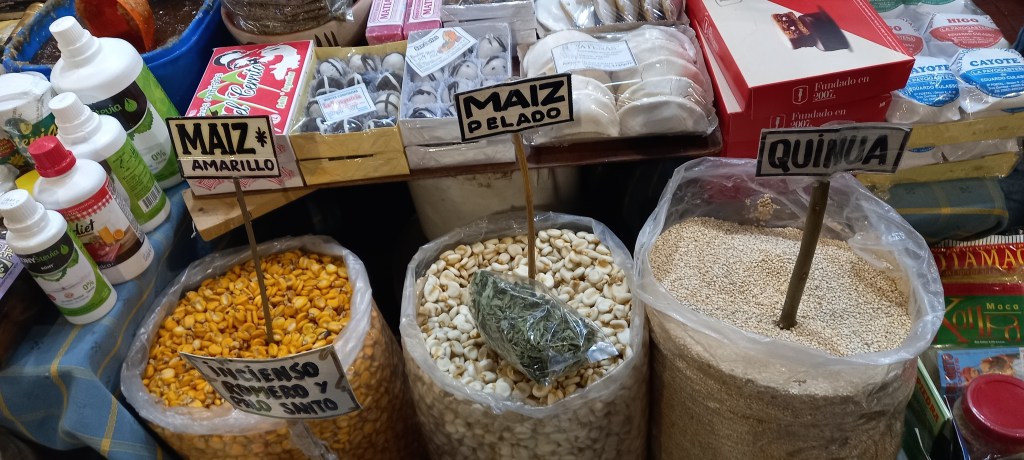
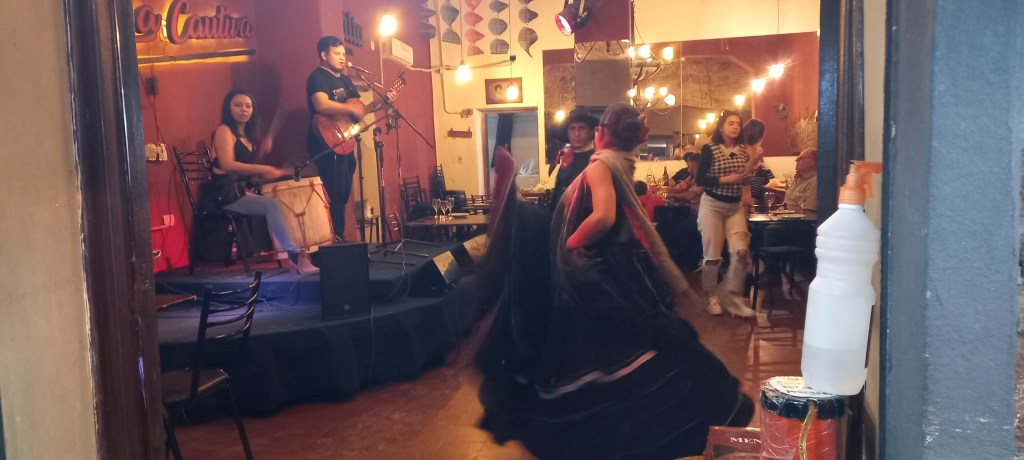
Corn in the Market, SaltaTraditional Dancers in a Pena, SaltaJasmine plant with flowers, SaltaTired feetNorthwest Trees, Salta window decorations depict the changing of the seasons,Salta
Recommended Tourist Activities in and around Salta
Try out an empanada made with llama meat
2. Ride the cable car to San Bernardo Hill for a panoramic view of Salta City
Mendoza, land of sun and great wine. You hear this from locals and visitors alike. There is plenty of sun, definitely great wine. With over 2,000 wineries, new wines being released all the time, and many places to taste boutique wines and new bottlings from established wineries.
We have been spending the winter here to check this hypothesis. so far, we made forays into two different areas to check out wines, landscapes and of course, food.
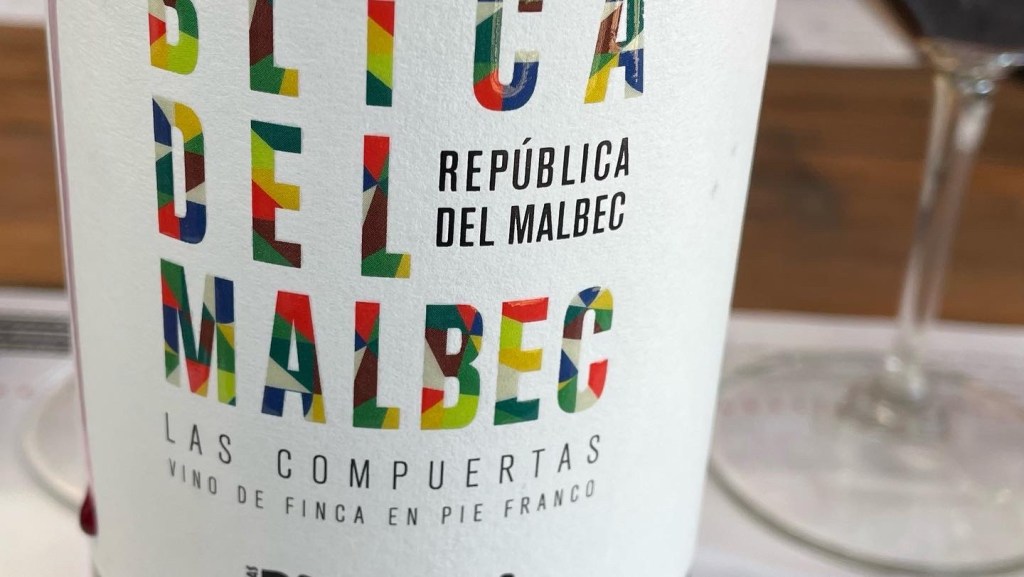
Situated in Las Compuertas, winemaker (enologo) Matias Riccitelli and team have built a growing operation using local grapes from vines planted as early as 1908. Their wines are organically, made with the spirit of ‘less is more’. No filtration, no sulfites, with the least possible intervention. We tasted several wines here, each one a surprise. Republica de Malbec is rich, bold, with soft expression of tannins and highly recommended. The name is a fitting tribute to the labor of the many people who have contributed to making this wine possible.
Clay Jar for aging winesVino de la CasaWine of the people
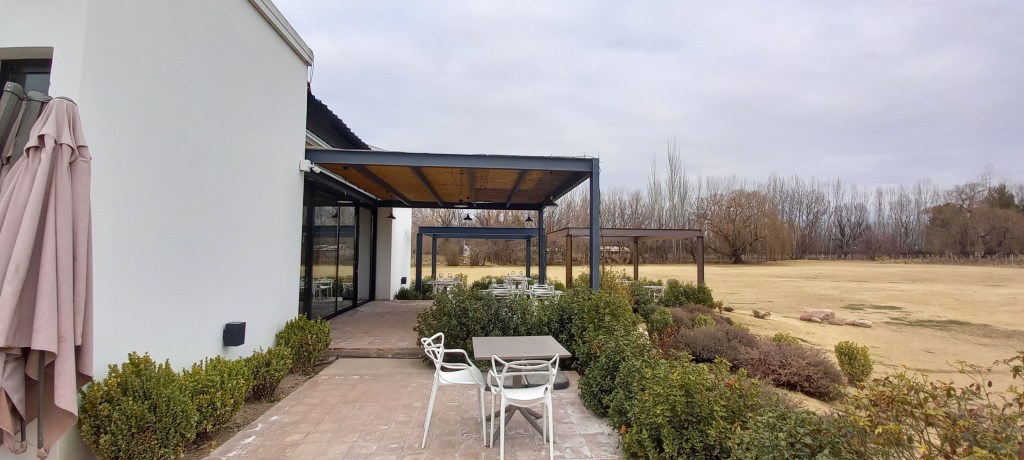
Situated in Tunuyan, and the heart of Valle de Uco. This area has been a center of grape growing for many years, with high altitude and different soils vineyards in this area producing different grapes to produce several excellent wines. Among the wines we tasted was a zippy white made from Pedro Ximenez grapes, more commonly associated with Jerez from Spain. The Cabernet Franc we tasted straight from the barrel! It had a slight note of tobacco, which brings to memory Dalmore whisky.
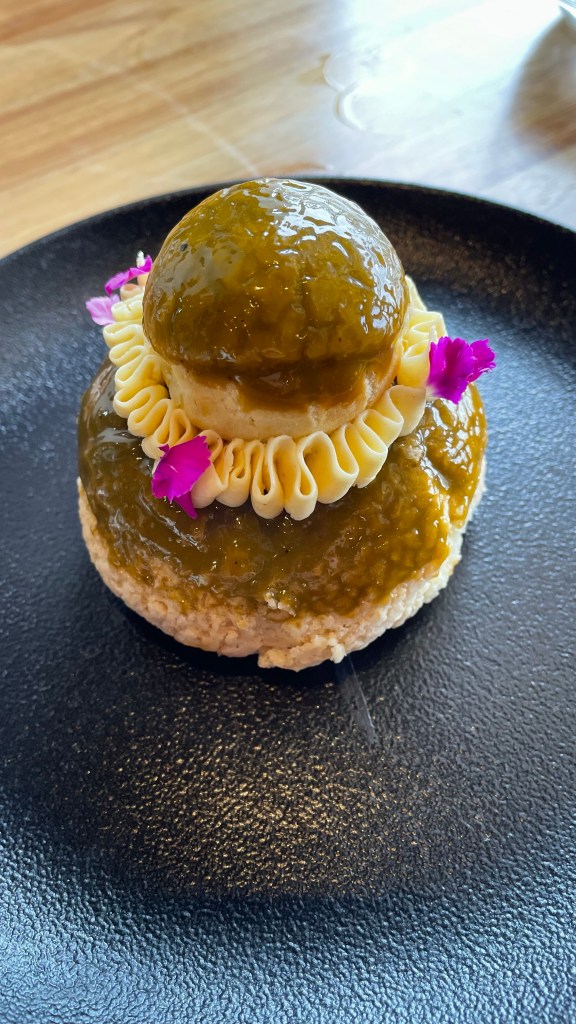
The lunch was great, starting with an amazing whole wheat bread topped with roasted onions, we enjoyed spinach pasta with morels and entraña and ended with scrumptious dessert of profiterole filled with cream and pavlova.
Entrance to Finca del Nunca JamasprofiteroleWines of Finca del Nunca Jamas
Provecho!
On our way back to the city, we drove back through Tupungato where you could see grapevines stretching out for acres. The other of the road was jotted with oil rigs and surrounded by the harsh rugged and beautiful landscapes with wide open skies and amazing mountains.
We concur that yes, Mendoza has plenty of sun, a few wintry days that brought in the needed snow to the mountains and some cold air to the city. This has been a really warm and sunny winter.. we are loving it!
Located at the eastern foothills of the Andes, Mendoza is the fourth largest city in Argentina. It is known worldwide for its extensive vineyards, love of wines and amazingly sunny days. There are numerous wines consumed by Mendocinos however, those made from Malbec and Cabernet Sauvignon are the most renowned and popular. Cabernet Franc is also rising in its popularity. Malbec a is a dark inky grape variety which is widely consumed with the quintessential Argentine asado.
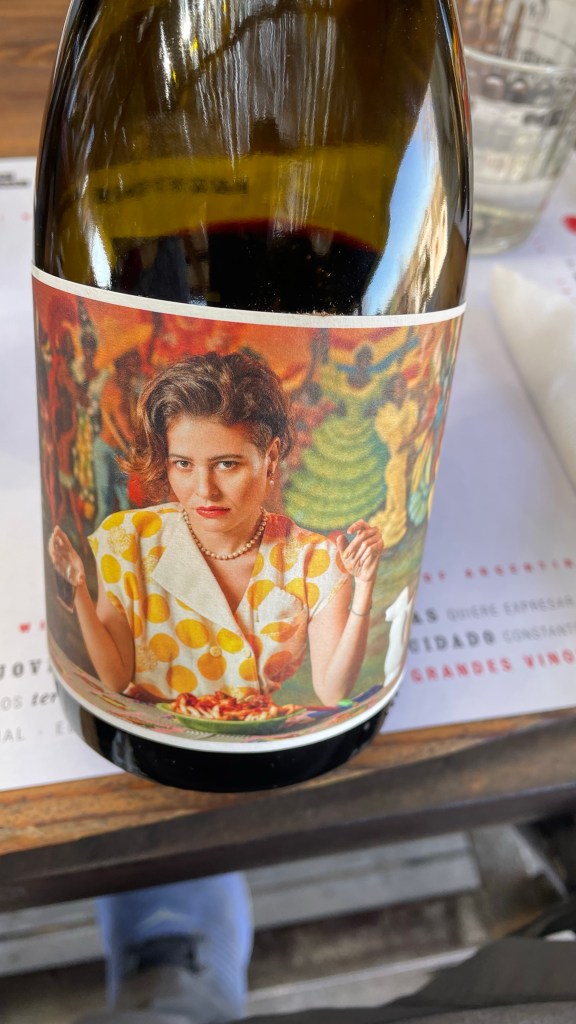
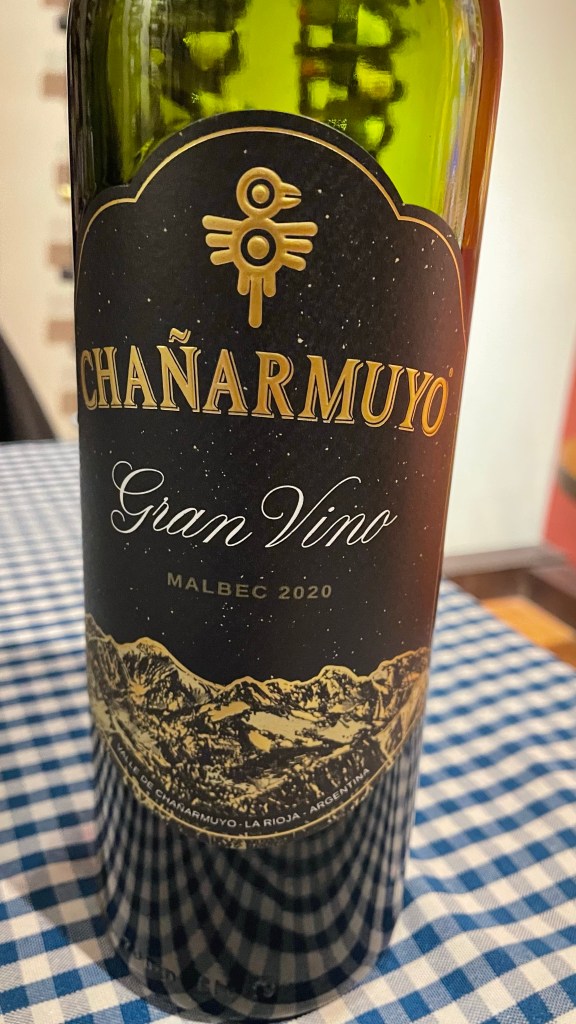
A sampling of Malbec offerings . See Gobar and Cache Bistro for a great selection in town
Mendoza favorite is Malbec wine, ready to complement the ever present asado.
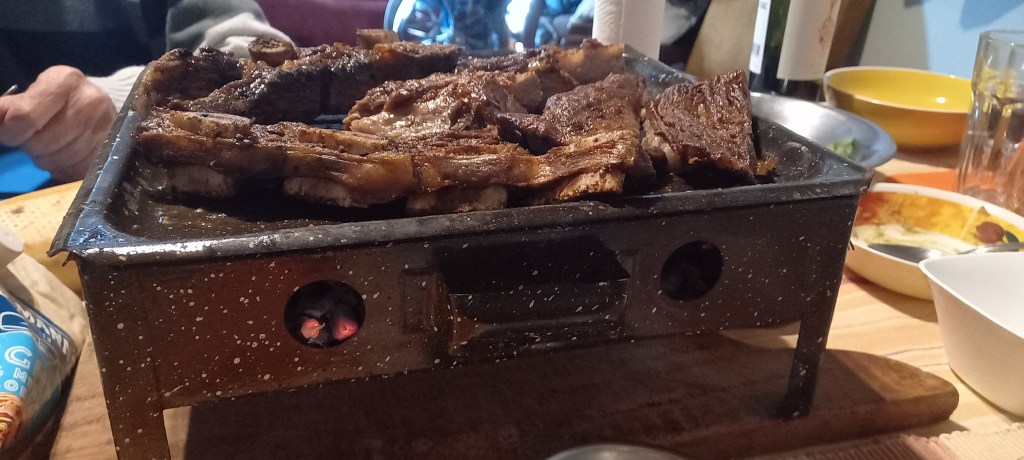
The core dish of asado is grilled meats, lots of it. This is a barbeque experience that you will find at its highest expression in Argentina. Sundays are dedicated to asados. Local families get together for hours to prepare and enjoy a variety of local foods. Asado involves more than a few pieces of grilled beef. We are told the calculation for beef is half a kilo per person. Usually, it begins with grilled provolone cheese, morcillas (blood sausages), empanadas-a turnover like dish made with a flour dough and a juicy stuffing of meat, cheese, onions, or vegetables. The preparation of asado is a valuable and almost sacred activity in Mendoza and all over the country. You can sometimes find three or four generations enjoying an evening conversations over this meal. Politics is openly discussed during this time so be prepared for the passionate and sometimes heated conversations that can occur.
The afternoon runs from asado to merienda, or afternoon tea. The conversation lingers and you find yourself drinking mate, tea or coffee with pastries into the early evening. Sometimes you will go home with some of the meat from lunch, for a light dinner!.
Wines are liberally consumed by the adults as the children delight in drinking cups of sodas mainly (Coca Cola and Fanta). Pastries, ice-cream, coffee, and tea are often consumed before the meal ends. Another favorite is the shared drink of Mate. Mate is a mixture of local herbs prepared by pouring hot water over the herbs in a special container. The hot drink is served directly from the container with a metal straw and passed around to each person for a sip.
Empanadas serving to compliments the asado but is also eaten as a snack
TIPS
When visiting Mendoza, if you are invited to an asado eat only a light breakfast. Go prepared to spend several hours eating, drinking and talking, bring a desert to share, ice-cream is lavishly consumed by all. For a great dessert you can visit Reggi Gelato.
Buenos Aires is a pulsating South American city consisting of many different neighborhoods, some traditional and many that continue to evolve. It is a city full of activity, attracting people from the surrounding areas, of Buenos Aires province.
Many futbol (football/soccer) teams remain in neighborhoods, within the capital city and surrounding areas. Which games you can go see will vary depending on the season.
For those interested in music, there are many venues where you can find live music almost any day of the week. We stopped by Thelonius Club to listen to Jazz and it was fantastic. (https://www.instagram.com/theloniousbuenosaires). You can check out their programming here (https://bue.tickethoy.com/lugares/thelonious-club). Thelonius Club is located in the Palermo Soho neighborhood which is filled with restaurants with a variety of cuisines. ice cream shops. If you are an ice-cream lover, Alchemy is a great find for your next visit: (https://www.instagram.com/alchemy.ba/)
Even though we had several recommendations from friends regarding food, coffee and more , Buenos Aires is a city that lends itself to walking and discovering on your own. In winter, it a very pleasant place to just stroll and let the day unfold.
Some suggestions for having a wonderful Buenos Aires experience:
Get local money by exchanging dollars right away. You may be able to exchange at the ‘Blue’ rate, a rate far higher than the official rate. The official rate is what you will get when using your foreign credit card. The exchange at the Ezeiza airport is as good a choice.
Get a local SIM card and add a pack of data. Coverage in Buenos Aires is similar across carriers (Claro, Movistar, Personal). You can easily add money to your SIM card in kiosks around the city.
If you plan to use public transportation (buses or trains) get a SUBE card at a kiosk and load it with money for a few trips. Trips are inexpensive and allows for travel throughout the city.
Cabify or Uber are apps for rideshares that work well. Sometimes it will take a while to get a car assigned so you need a bit of patience.
If you arrive at Aeroparque, the local airport, you can get a guaranteed rate for a taxi by scanning a QR code outside at the taxi stop and enter your destination. The taxi drivers will charge you the stated amount. This help to illuminate potential surcharges and surprises.
Some local parks close on Monday!!!. For example, Jardín Botánico Carlos Thays. Plan accordingly.
Make reservations ahead for lunch and dinner if possible. We were able to get a table at Tigre Morado on a Saturday for lunch but needed to leave before the people that had reservations came. A few place to check out the food are Aho Negro, La Dorita, Panederia Ritz for sandwiched de Miga and please don’t forget to try a street food stands for a choripan on the go.
Many restaurants open until late. If you don’t feel like going out, PedidosYa or Rappi can get you almost any food you want. You can pay with argentine pesos if you don’t have a debit or credit card.
Buenos Aires is a walkable, green city with wide boulevards, museums, theaters and restaurantsand it is a food lovers paradise. The mix architecture, music and art has a surprise waiting for you in every corner. There is history and culture to keep you interested, and plenty of food and drink to keep you energized as you discover this sprawling city.
The Covid19 pandemic has changed many things for so many people. For my family, one of the most significant impact was placing premium value on quality time together and living in the moment. In 2021 when many families remained hunkered down at home, my husband and I decided to travel. Everyone thought we were insane!
After the 2020 Christmas spent at home we visited NYC, Puerto Rico, Jamaica, Iceland and Spain. It was during our 15-day trip living in a small campervan that we made a few big decisions. This campervan had the basic necessities: a bed, heater, a cooler, a burner, and much appreciated privacy curtains. Our time was spent mostly outdoors, and we had one of the most amazing experience enjoying nature’s magnificence and the company of each other. While on the road, we were able to continue our work obligations without problems, which seemed the most natural thing to us once we had reliable Internet access. In Iceland, Wi-Fi connections are available in some camp grounds. However, its important to plan ahead, check to see if accommodations are available and choose the facilities that best meets your needs. We used camping.info initially to view the map of the camping locations, ratings and information about many different campsites you can go to https://utilegukortid.is/?lang=en. If you would like to experience Iceland in a camper remember that housing and food costs are high so I would recommend you consider including some prepackage foods for your trip.
Our #kukucamper, #wonderwoman. This was our home for 15 days.
The most important realization for us was that we do not need a lot of things to live a happy and fulfilling life. Though, this thought had crossed our minds previously, we were not able to make it happen, giving the complications we saw at the time.
Fast forward to 2022. Firstly, we are extremely thankful to have survived the pandemic. We have settled most of our commitments in the US. We have embraced a different mindset about life. Now we begin a new journey as nomads, nuevo (new) nomads. we invite you to explore with us different cultures, foods, unique customs and different ways of living. We will provide tips and tricks to make your own trips memorable and enjoyable.
We appreciate your time here with us to share in this new experience. Until next time.
We are starting to document our journey as nomads. Taking new steps in places we thought we knew, discovering new places, sounds, tastes and smells.
We are passionate about food, where the ingredients come from, and how it is made. Many great conversations start around the table, preparing food and remembering something you tasted somewhere.




























 Nuevo Nomads