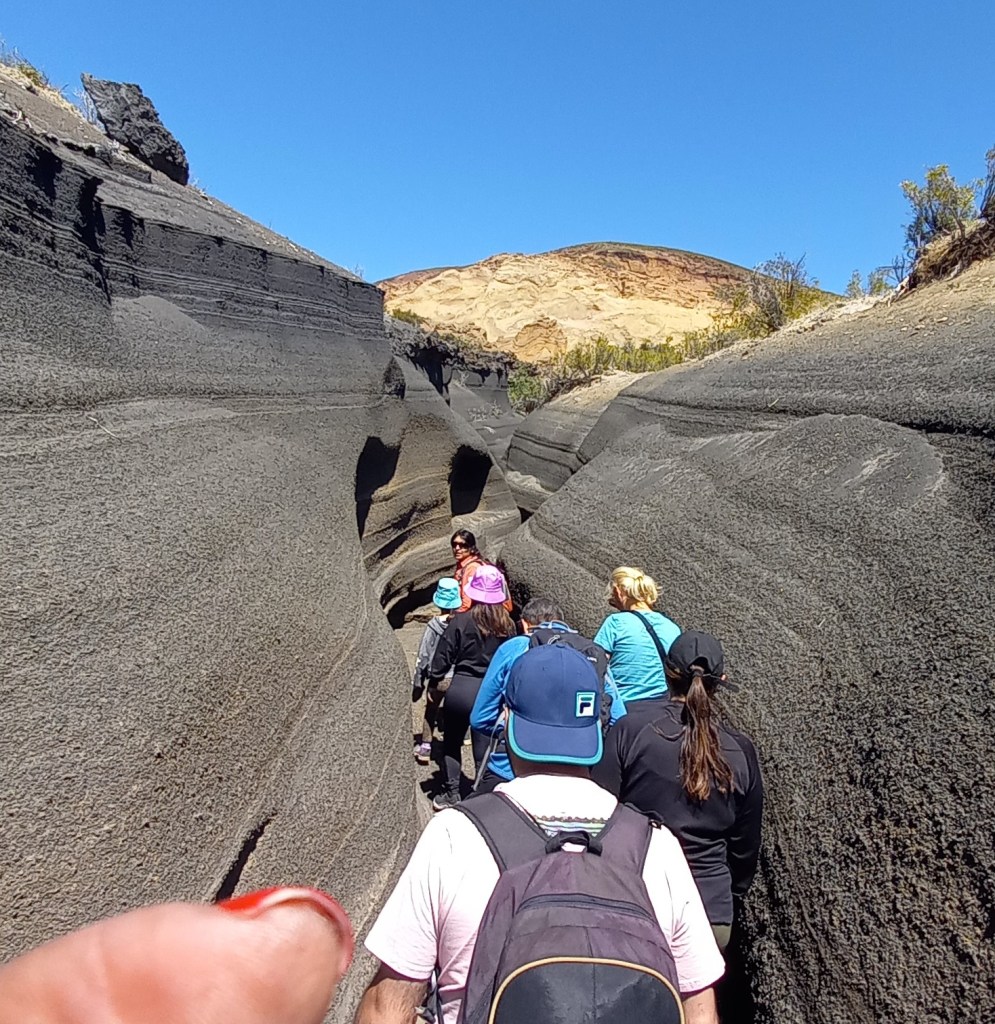
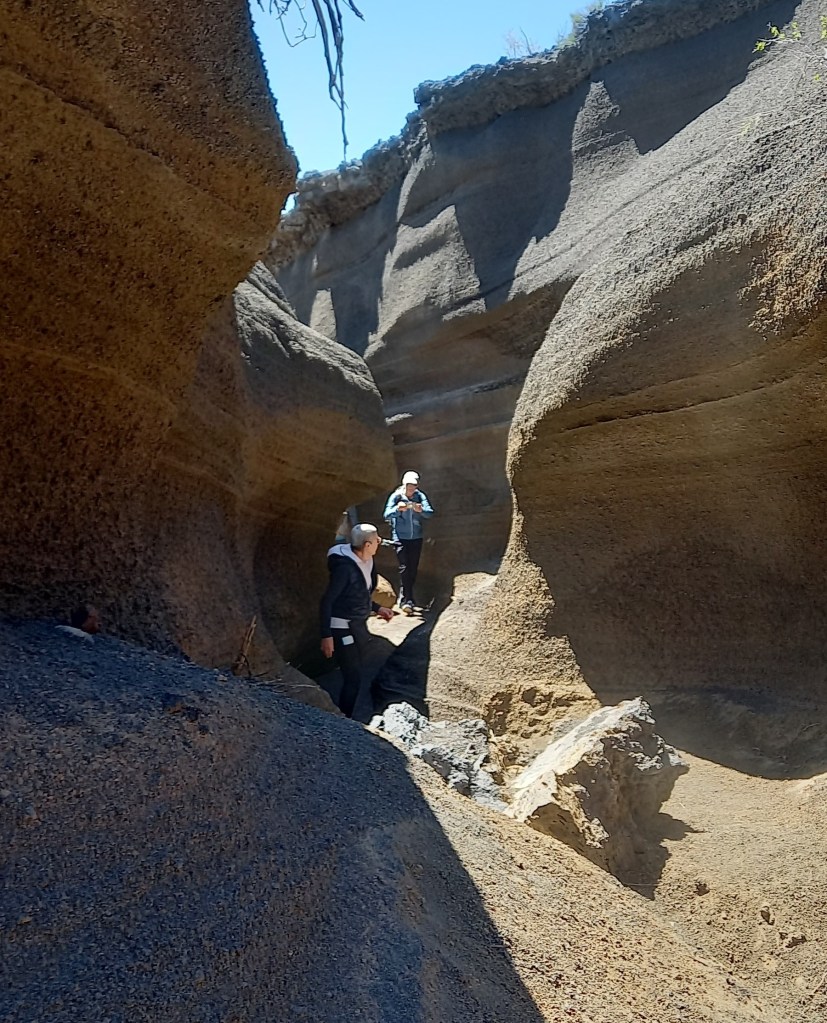
We enjoyed an exhilarating hike into volcano Malacara in Malargue. This volcano had rivers of lava that solidified as magma erupted in water over 450 thousand years ago.
Exploring Vulcan Malacara in Malargue, Argentina
We continued the drive south and stopped for a short hike in Manqui Malal to see the angel hair waterfall and hunt for Amnonites (fossils) by the river. It was a fun and educational activity. We were rewarded with several fossils finds.
Fossils Find in Manqui Malal Argentina
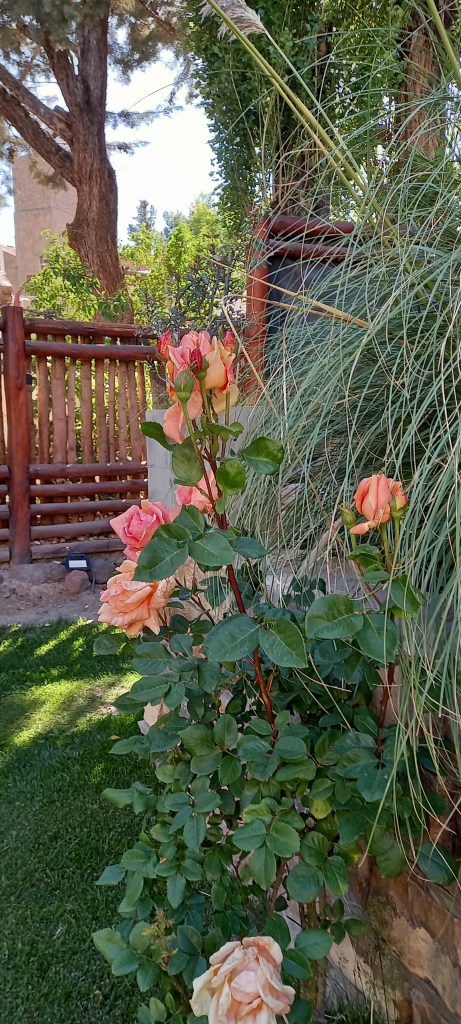
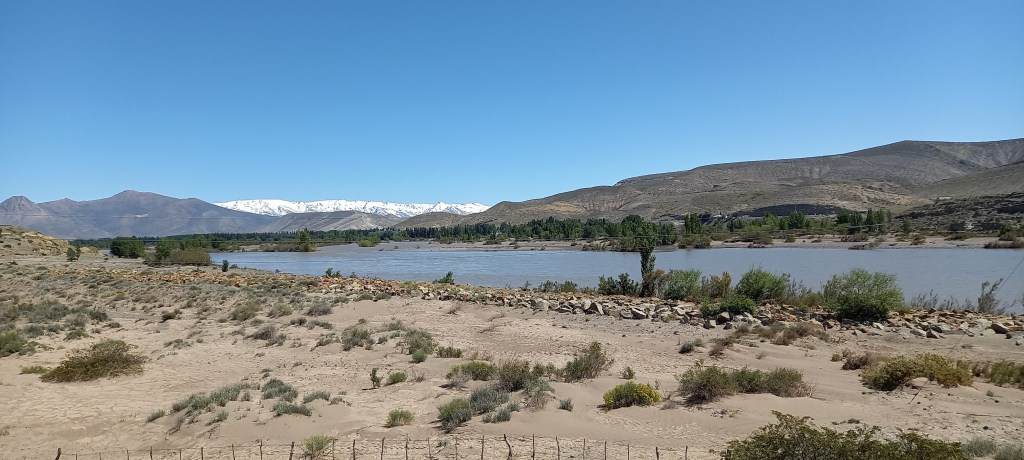
We continued over 80km on mostly “unpaved highway” then crossed the river Barancas into Neuquén province and drove to the beautiful town of Chos Malal. A Patagonia frontera town Chos Malal lies between the Curri Levue and Neuquén rivers. The town has amazingly beautiful landscapes and an abundance of roses of almost every color and huge blooms. After a peaceful rest in the hotel Terra Malal, and a gem of beauty and tranquility we continued south.
Rose blooms and Neuquén River in Chos Malal Argentina
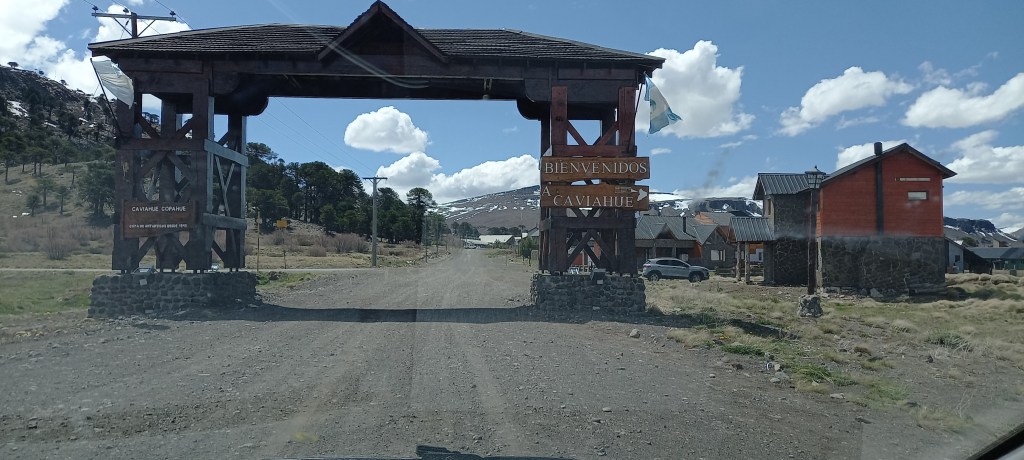
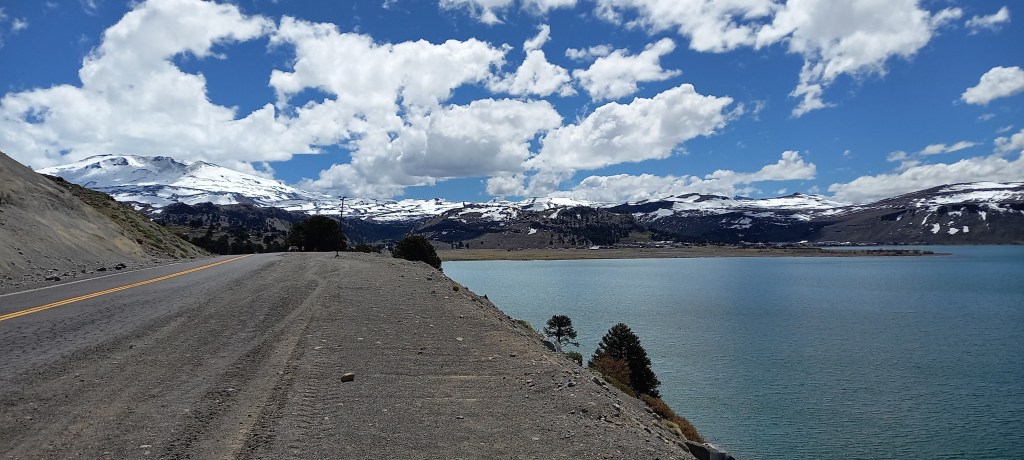
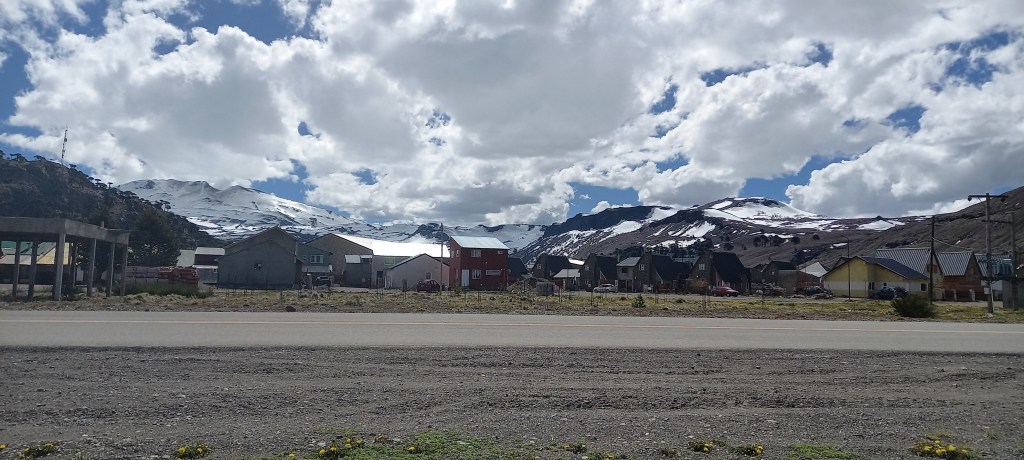
A short detour took us to Caviahue. The home of fresh trout, located by lake Caviahue and the foothills of volcano Copahue. We will stay here a few days.
We left Copacabana and after about two hours by bus we arrived in Puno Peru. Puno, like Copacabana in Bolivia sits on the Peruvian shores of Lake Titicaca. Its economy is primarily agricultural and livestock (llamas and alpacas) based. The town is famous for its access to the floating man-made islands on lake Titicaca. We spend only a short time in Puno and soon headed on our road trip to Arequipa.
Arequipa City-After several hours of driving in the dark we arrived in Arequipa. We got off the bus into a taxi and headed directly to our Airbnb for a well needed rest. The next morning when we awoke and looked outside, we observed this giant mountain that appeared to loom immensely over the city scape, It felt so close to us. We did not expect this, so we inquired and were told that is Misti. Misti stands at 5,822 meters or 19,101ft above sea-level and forms part of a series of volcanoes in that region of Peru. The entire city scape and concurrent culture of the city is dominated by the presence of this mountain.
The city has a Spanish colonial era layout. The main historical center consists of a central plaza, surrounded by the Basilica Cathedral, shopping, restaurants, museums set off by lovely palm tress and other ornamentals. This is where you will find the locals gather to listen to music, sale their wares and air their grievances by protesting. The Santa Catalina Monastery is a major attraction in Arequipa. small city within the city.
Sunset in Arequipa
This very popular monastery is a small self contained city that was founded in the late 16th century. It consists of many cramped but charming streets lined with tiny colorful, houses. These houses we learned, were inhabited by the nuns that lived in the monastery centuries ago. As we wondered around streets, we realized we were exploring a very old but well designed city of plazas, fountains, and cottages. The internal spaces in many of the cottages were creatively designed for the outside light to filter inside. As we prepared to complete our tour, we wondered into a lovely garden, it was like stepping back in time. A space which appeared intentionally designed for serenity and tranquility. It had seating, and planted with flowers and several types of fruit trees.
Over the ensuing two weeks, we immersed ourselves in the food, music, and the culture of the city by walking and hiking around the city. We found Tipika restaurant to be a welcoming and friendly place were you could have tasty meals for a resonable price. We absolutely enjoyed the chicharron de chancho Arequipa. we were impressed by the variety of fruits, meats, food and vegetables for sale in the market. The market was like no other we had encountered. Two memorable moments for us in this beautiful market were having our heads measured for customed felt hats at Elyca Sombrereia and drinking fresh juice from the juice bars.
After spending a memorable time in high altitude La Paz, we embarked on a road trip to visit the Bolivian side of Lake Titicaca. The experience was unimaginable to us. The drive was filled with excitement and anticipation while also exhilarating and uncomfortable at times. Mostly, we were in awe of the places we visited; the alluring warmth, the charm and the friendliness of the people we met along the way.
After a long taxi drive in the unpredictable La Paz traffic, we arrived at the bus station for the start of our bus trip to Copacabana. The bus trip was mostly uneventful and we slept. I was awakened by the driver telling everyone we must all disembark from the bus with only small personal belongings to catch a boat to cross the lake.
Although I was told this would happen before, somehow, it didn’t quite register in my consciousness. Nevertheless, we climbed down from the bus and were shown a small Kiosk where we were instructed to purchase a boat ticket to the other side of the channel. It felt surreal as we climbed into the small boat and were whisked across the lake to the other side in about 10 minutes. We disembarked and wondered around the small lakeshore port of Tiquina. Some passengers went off to browse the stalls while others took pictures.
After about 20 minutes our attention was drawn to the lake and the approaching barge. To our surprise, our bus was perched precariously on top of the barge. It was a strange sight, so we gathered around to capture this incredible photo of our bus crossing the lake on the barge.
The trip continued, until we eventually reached Copacabana. This lakeshore town is located on the south shores of Lake Titicaca. It is from here that many scheduled trips on boats sail out to the sacred islands of Isla del Sol and Isla del La Luna. The town has several restaurants, coffee shops and tourist shops and stalls. We proceeded to the kiosk to purchase our tickets to Isla del Sol.
The boat took about two hours to get to Isla del Sol. As we approached, we saw a steep rocky island in the middle of the lake with several ruins and agricultural terraces climbing up the slope from the port. When we disembarked, we were met by our transport, a donkey and its lady driver and our Airbnb host. There are no motor vehicles or paved roads on the island and so you must walk everywhere. Our suitcases went with the donkey and we proceeded to climb up the many steps leading up from the port.
Arriving on Isla del SolTeodora with CamachoSteps up from the port
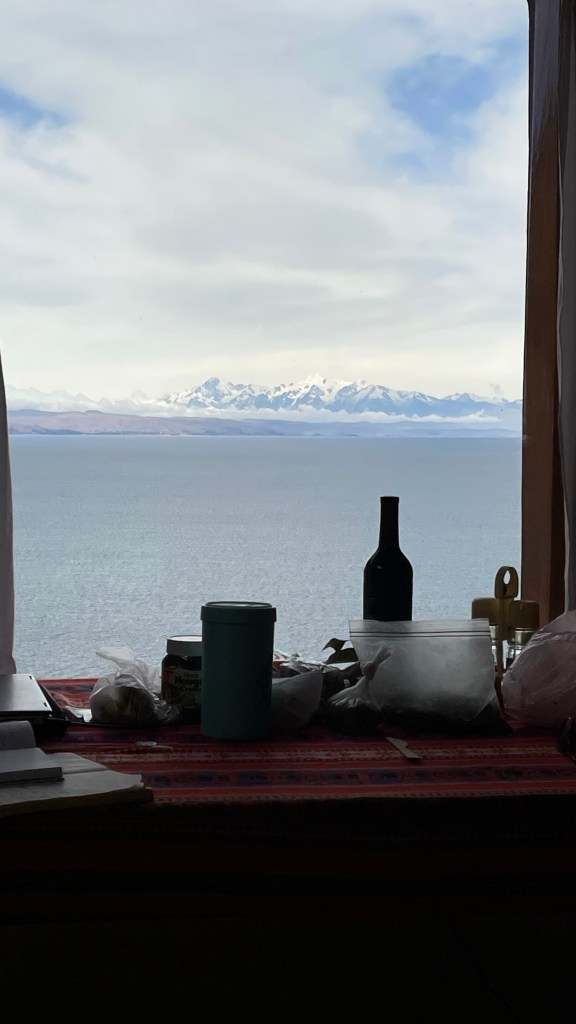
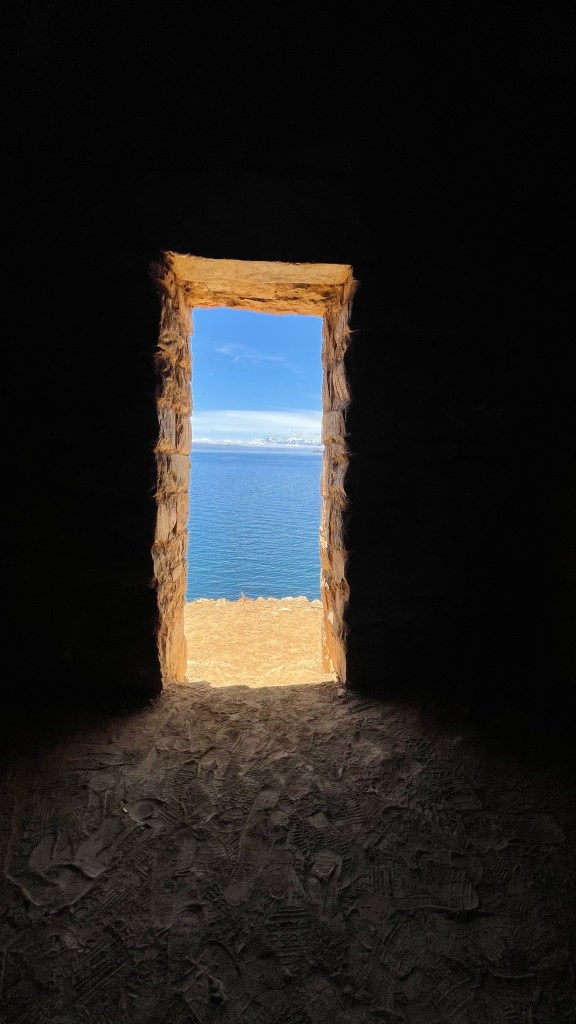
We arrived at our cabin, and were rewarded with one the most spectacular views you could ever imagine. The varied blue colors of the lake against even bluer skies and the snow-capped Andes mountains was absolutely divine. We retired to bed early after our tasteful and well deserved meal of local lake trout. Over the next three days we basked in the untamed beauty and serenity of the island. We enjoyed absolutely amazing sunrises, sunsets and views of the impressive Lake Titicaca and snow-caped Andes from our bedroom. Because of the altitude, we avoided any intense hiking but took time to explore a bit of the island. We were well cared for by Teodora, who made sure someone brought us breakfast on the days she was travelling to Santa Cruz for a wedding. Teodora even provided us with fresh muña muña from here garden to help us alleviate the symptoms of altitude sickness (Isla del Sol is located at 13,045ft above sea level). Sadly, due to mounting symptoms of altitude sickness, we curtailed our stay and headed out earlier than planned to Puno and then onwards to Arequipa, Peru.
Terrace slopes for growing cropsView of snow-capped Andes from our cabin Sun Palace Ruins
Isla Del Sol has a rich history, we share these few pictures to give only a miniscule view of the island .
View of the lake and Andes from the Sun Palace ruinsSunrise on Isla del Sol
Tips for travelling by bus to Isla Del sol
Bus and boat trips are not the most comfortable, there are plenty of bumps and jerks so travel with medicine if you get sick easily.
There are not many options for housing, we highly recommend Teodora’s place (Cabanas Ecologicas Santo Campo) in Aribnb. Book your overnight accommodations early or before arrival on the the island.
Internet and Wi-Fi connections are spotty or limited so be prepare you might be disconnect during your stay. Local Telecom provider Entel has service in the island.
You must pay for entry to the island, about US10.
The locals do not like to be photographed so be aware of this, they will let you take a picture with a llama for a fee.
There are no roads and your accommodations might be a steep climb from the port if your accommodation is further up the island. I recommend that you travel light to Isla del Sol.
The last quarter of 2022 was an extremely busy time for us. We spent November and December travelling in Bolivia, Peru and Argentina ( we will post some highlights from those experiences later). We arrived back in the US in mid December to spend the holidays with our family in NYC. In January, we took a break from the cold and dreariness of NYC to visit Spain and Portugal.
We arrived back in Seattle primarily for a legal case against the University of Washington. Although the outcome was not in my favor, I remain convinced I achieved an important goal that brought to the public light some personnel practices at the institution.
Bolivia, like its neighbor Paraguay, is a landlocked country in South America. It shares borders with Argentina, Brazil, Chile, Paraguay, and Peru. The two most populous cities in Bolivia are Santa Cruz de la Sierra, a large city located in the eastern tropical lowlands and La Paz, a mountainous city located on the altiplano. One of the most striking observation for me in Bolivia was the drastic change in climate from Santa Cruz to La Paz. One moment we were uncomfortably hot in the humid lowlands, few hours later we were freezing in the dry cold of La Paz Department.
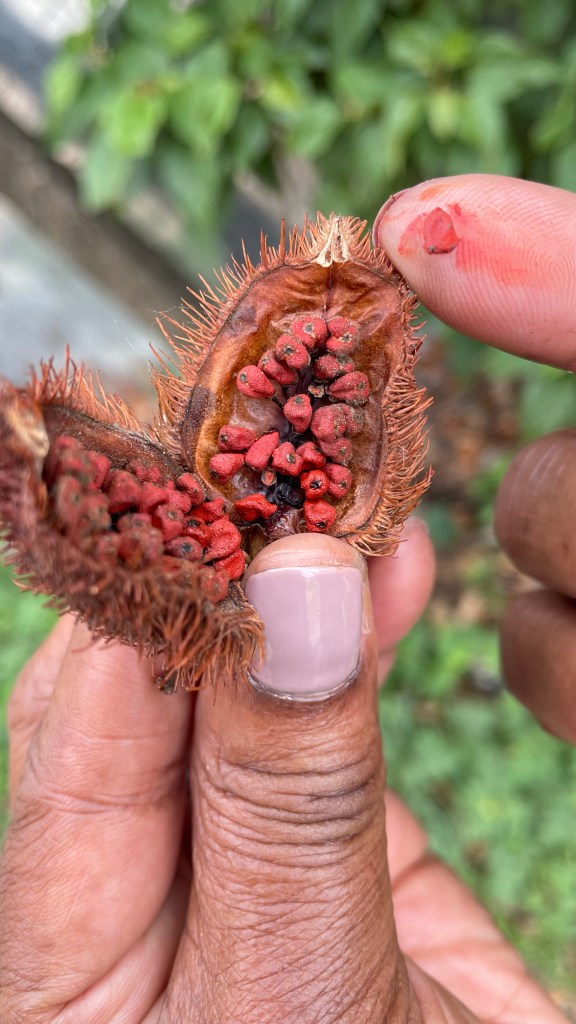
Rapidly growing Santa CruzAnnato seeds used for cooking, Santa Cruz
Transportation across the city of La Paz is challenging. There are no obvious logic or reason to the manner of driving especially among the cars and taxis. One can easily get bogged down in this type of traffic for hours….not desirable with limited time. An amazing array of cable cars can be seen dotting the entire cityscape to alleviate this transportation nightmare. This organized collection of cable cars forms the backbone of an urban transport system affectionately named “Mi Teleferico“. For a few dollars, you can enjoy some breathtaking sights from up high. This is a delightful way to view the snow caped mountains and undulating and alluring terrain of La Paz city. Although, to experience the array of tastes, scents and hospitality of the people in this awesome city, you must do some walking around in the neighborhoods.
La Paz has a rich and eclectic mix of peoples, customs and cultures and this represent the multiethnic and multicultural diversity within Bolivia. Although a large number of Bolivians have European ancestry, the majority of Bolivians have indigenous ancestry and self identify as mestizo, a mixture of Hispanic and Amerindian cultures. The colorful dresses of the Quechua and Aymara are dominant in the countryside and high altitude places such as Copacabana, Bolivia, and Isla del Sol in Lake Titicaca. This makes Bolivia an interesting place to explore and learn about some of the oldest cultures in the west.
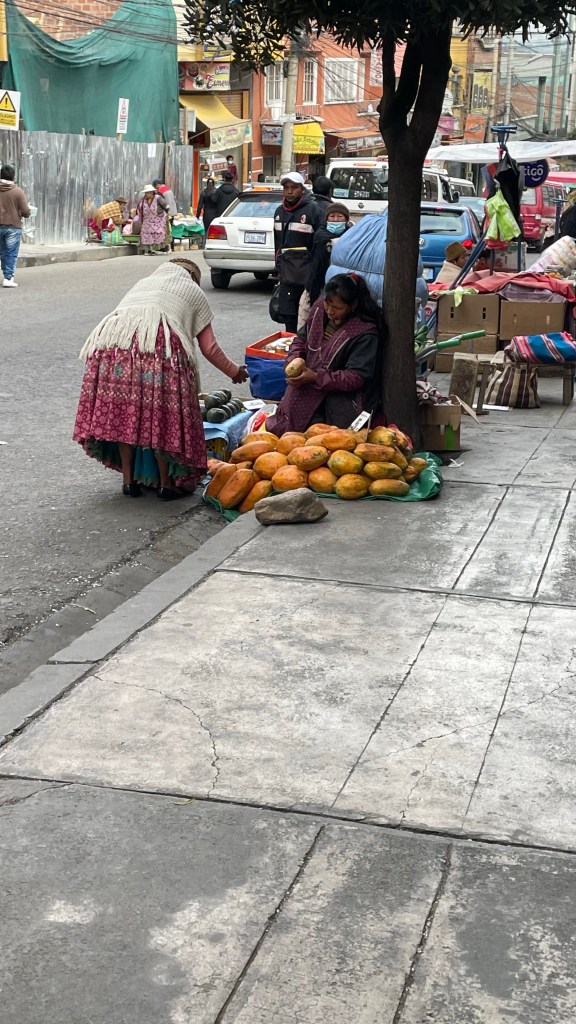
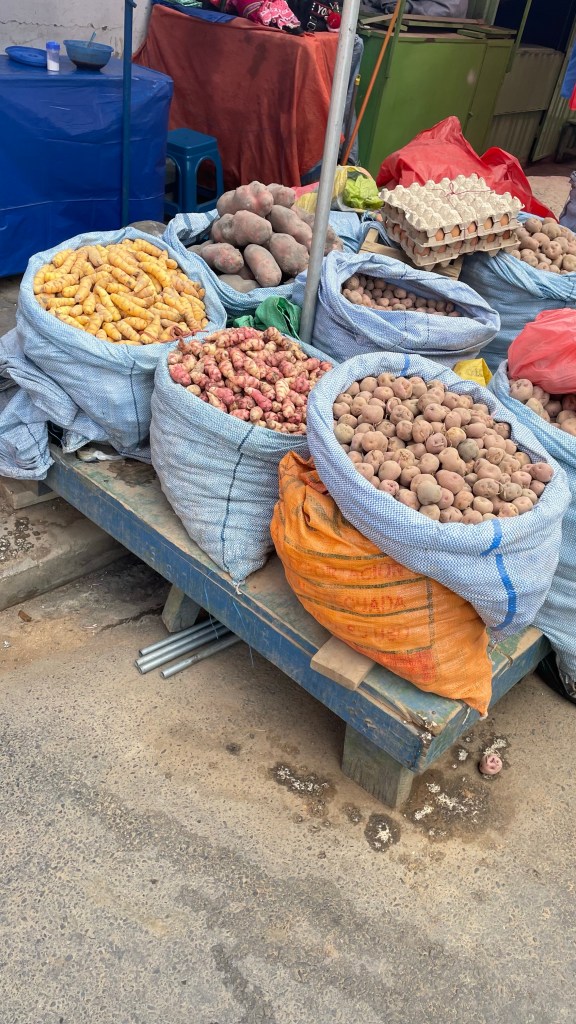
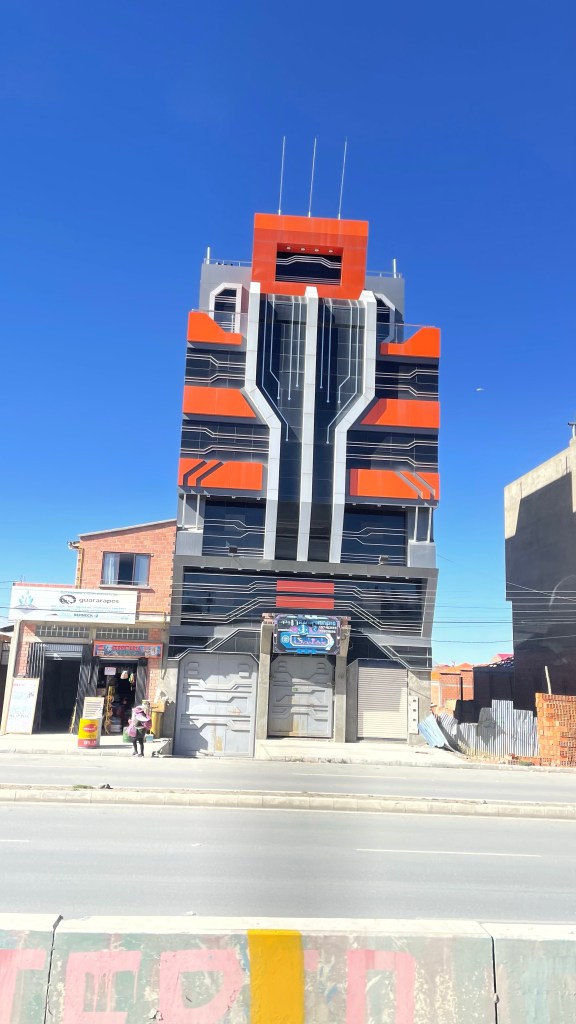
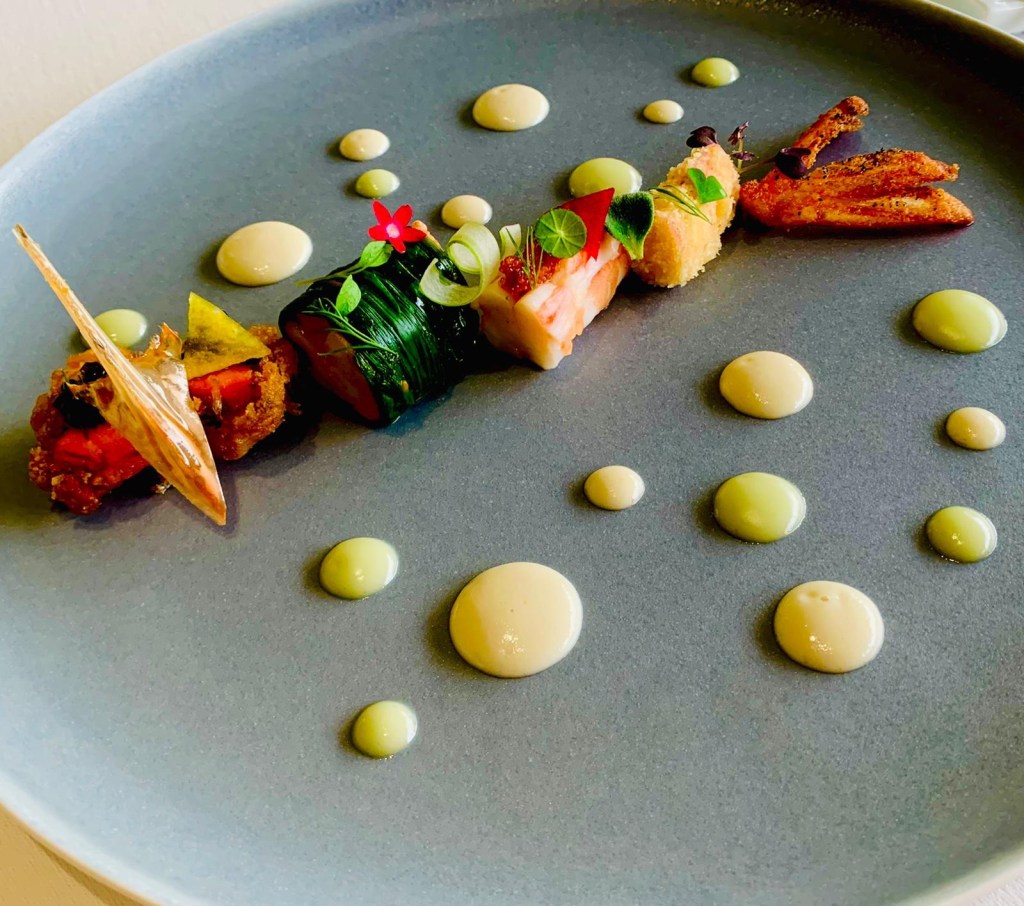
View of La Paz business districtMi Teleferico, Green LineFruit vendor, La Paz Potatoes and roots , La PazTransformer’s style in La PazTransformer’s style in La PazHigh cuisine in La Paz @ Gustu
Tips for visitors to Bolivia
Travel everywhere with bottled water for drinking and brushing your teeth.
If you plan to visit the high cities of La Paz, Copacabana or Isla De Sol in Lake Titicaca be prepared with medications to cope with the high elevations ( altitude sickness).
Road transport in Bolivia is challenging, plan ahead and be flexible with your time. If time is limited you can get a high up view from the cable cars in La Paz.
US citizens are required to get a entry visa to Bolivia. The cost of this visa is US$160, valid for 10 years. You can get the visa upon arrival to any port of entry.
Everyone needs to show an exit ticket (bus/air) from Bolivia upon arrival to a port of entry.
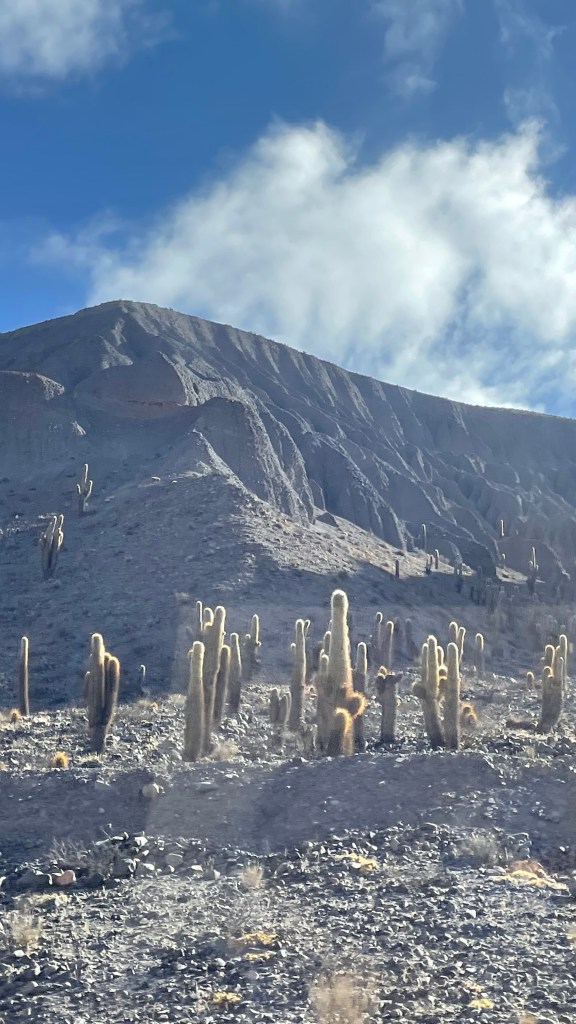
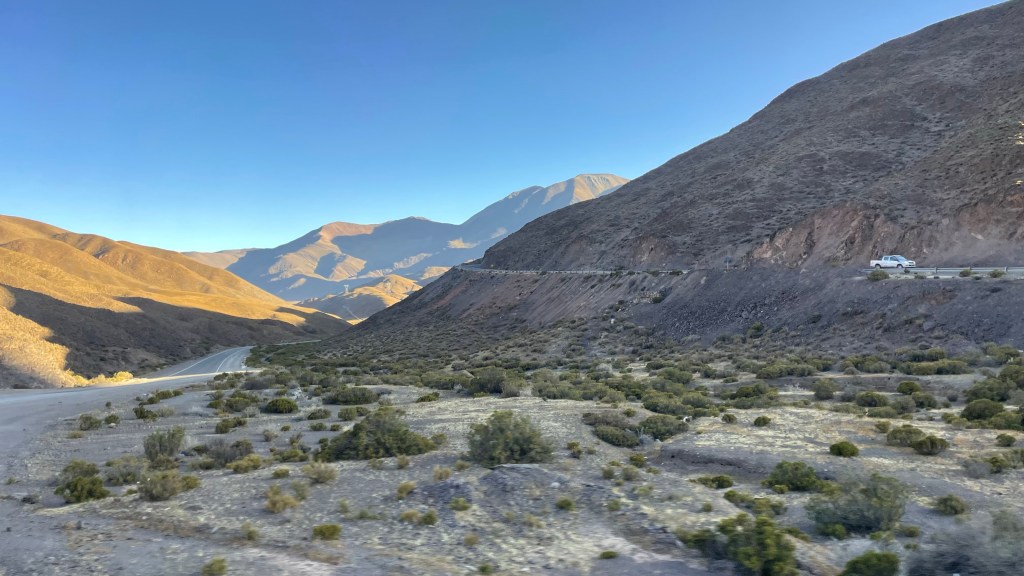
We never could imagine being evacuated at nearly 4000meters. It is no fun but this actually happened to us when we went for a trip on el tren a las Nubes-train to the clouds. After a very long bus trip by bus from the station in Salta we arrived at the San Antonio de los cobres. A very small town in northwest Argentina located at a high elevation (3,775meters or 12,385 feet above sea level. Instead of trees. the hills are dotted with large cacti and some shrubs.
As we traveled up the mountains, we saw small stalls with many types of clothing and goods. Very popular are the Llama wool sweaters, coca leaves and coca candies. As we approached the high elevation we began to share our own coca leaves as we were told this would be helpful in preventing altitude sickness. Obediently, everyone could be seen folding up the few coca leaves and inserting this roll of leaves between the teeth and the jaw as instructed…”don’t chew on it we were told” chewing. we understood could upset our stomach.
Car by car and excitedly we boarded this lovely little train. The guide in our car was amicable and knowledgeable about the area. She pointed out for us the most picturesque and historically significant places ( light the blacked soils of the volcano that erupted 6000 yrs ago. After about 45 minutes the train suddenly stopped, we were told some Llamas were on the track, then that something need to fixed on the locomotive so we waited and waited. After more than an hour we were told we needed to be evacuated. Passengers were concerned and even became agitated, there were elderly people and a few children on the train.
As we were being evacuated many people became ill with breathing problems. Some even passed out. Luckily, there was a trained nurse on the train so the most ill were treated and given oxygen. That walk to the evacuation vehicle was very short, but it felt like the longest and most difficult walk ever. A million thanks to the wonderful people of San Antonio de los Cobres. They gather up their vehicles and came out to help us down from the mountains to the waiting buses.
Tips for altitude travel in Argentina
1. Be prepared for falling ill at anytime
2. Travel with some type of medicine for altitude sickness
3. Coca leaves is easily available in some markets, srojchi pills can be bought in any Kiosk
4. At altitude walk slowly and breathe deeply
5. Do not take risks, know your body and don’t over exert yourself to get the views and pictures.
In the past, I could not have imagined myself on a 15 hours bus trip to anywhere. Last month, we did just this travelling from Mendoza to Buenos Aires. We settled on bus because our visitors (my sister and spouse) insisted on seeing the great Pampas of Argentina. To satisfy her visions of countless cows, big open blue skies, and grasses stretching miles to the horizon, we packed lunch, bought pop corn and head out in our top-of-the-coach seats to see the Pampas and Buenos Aires.
Buenos Aires, Argentina
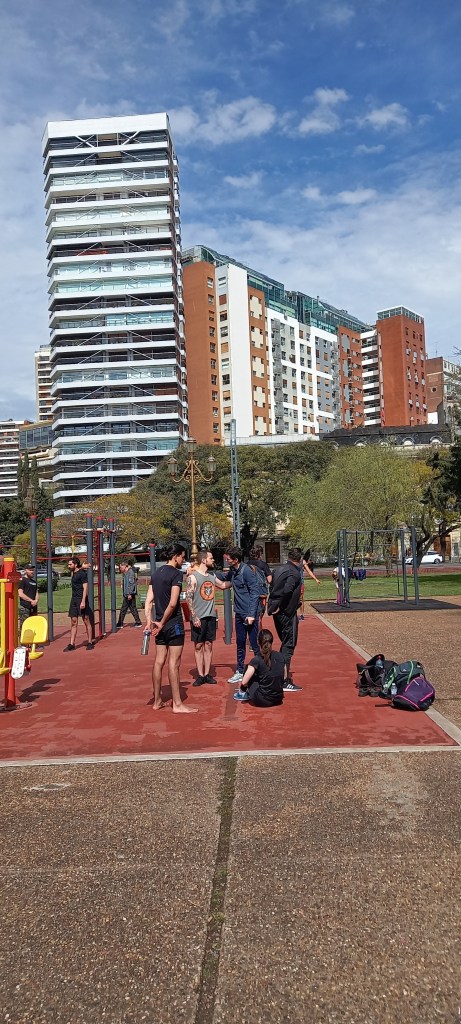
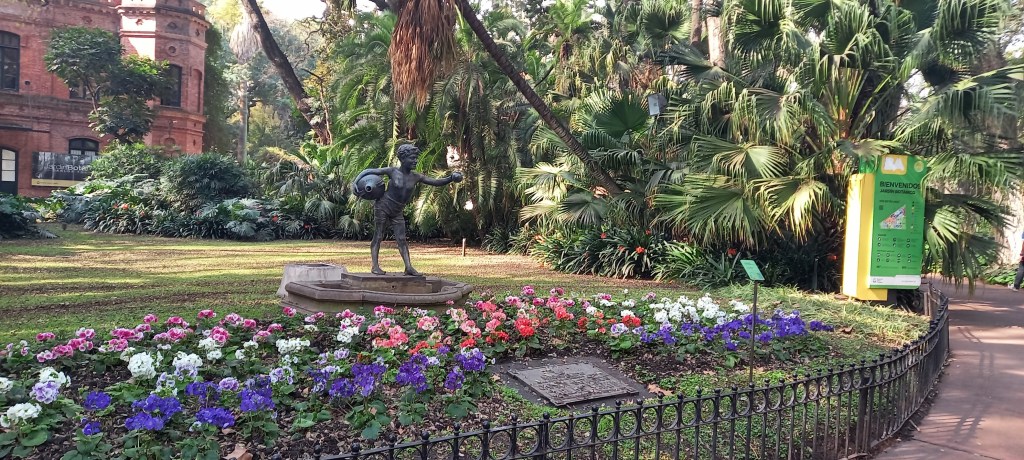
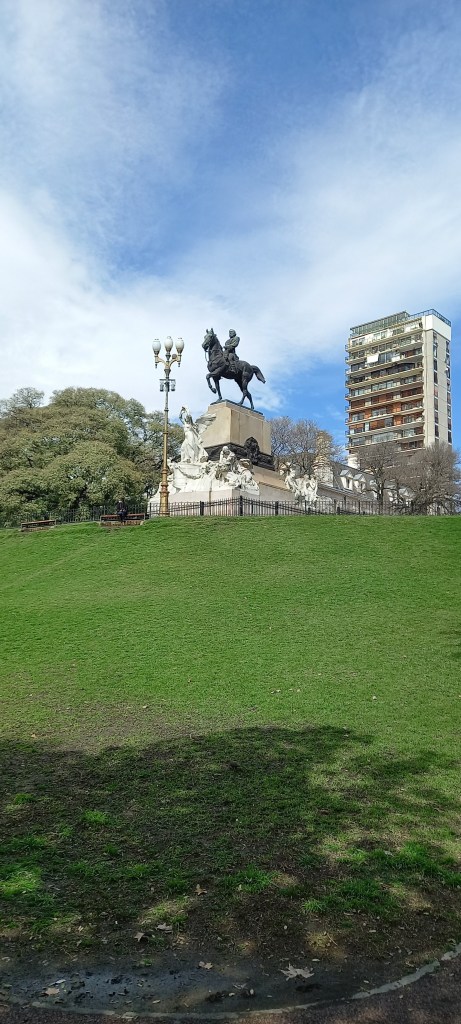
Morning exercises in neighborhood park Buenos AiresHistorical monument on display @ UBA Law schoolBotanical Gardens, Buenos AiresMerienda, tea and wine Buenos Aires Monument of Bartolome Mitre, Avenida del Libertador y AgueroDaily blooming, floralis Generica Buenos Aires
The actual experience was different than imagined. We mostly slept, saw few cattle, few trees with mostly foggy vistas as we transitioned in and out of sleep. Lacking of sleep, and with tired rumps , we finally arrived to the ever bustling and energetic Buenos Aires city. Rested and refreshed we were delighted and ready to indulged in a few days of walking, sightseeing and eating way too much. Before leaving, we arranged a day trip to experience the quiet and charm of Colonial del Sacramento in Uruguay. The 27 miles and 11/2 hr. crossing of the Rio de la Plata by boat was uneventful. In Colonia, we spent a fun and exciting day sightseeing in our rented golf cart…it was an unusual and exhilarating experience.
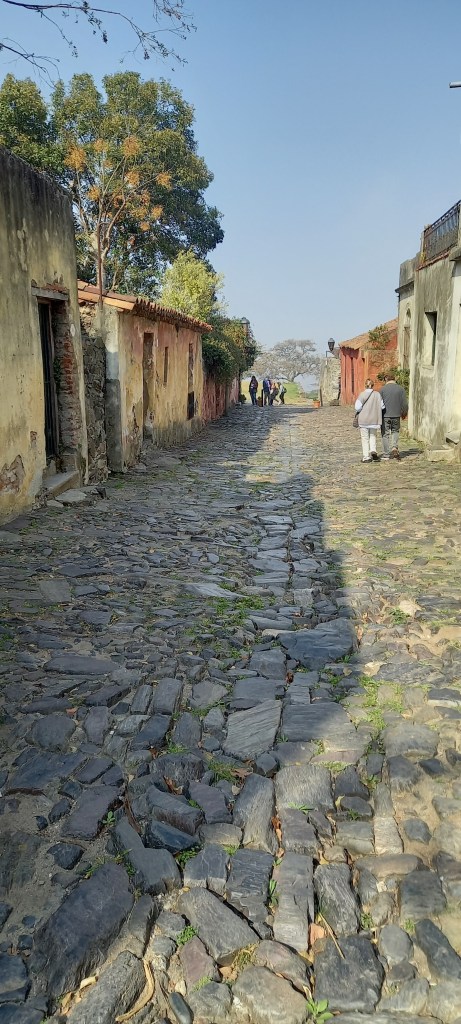
Colonia del Sacramento, Uruguay
Historic Church in Colonia, UruguayOld Portuguese street in Colonia de Sacramento, Uruguay Afternoon tea, Colonia, Uruguay
We returned to Mendoza by air and after seeing our visitors off, embarked on a second 17 hours bus trip from Mendoza to Salta. Salta province is located in the lesser known northwest corner of Argentina, and it is famous for its culinary delights, nightlife and high altitude white aromatic Torrontes wine.
Salta, Argentina
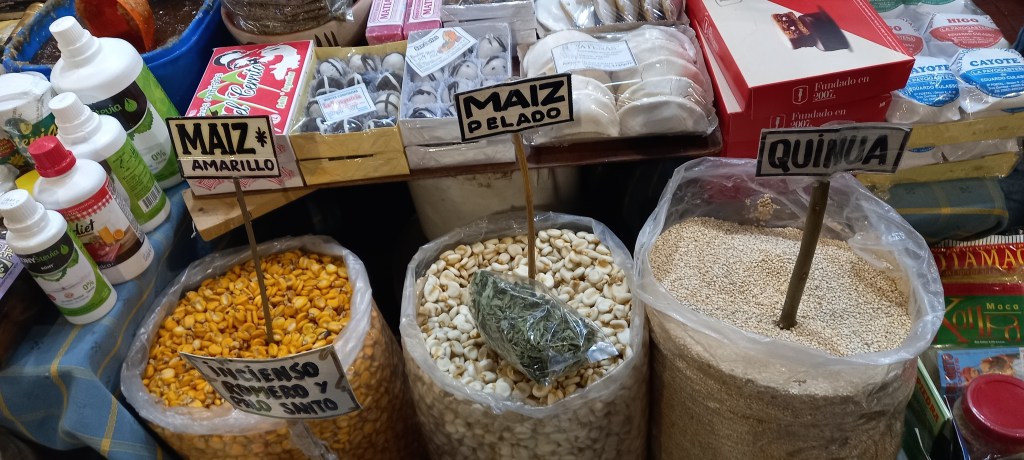
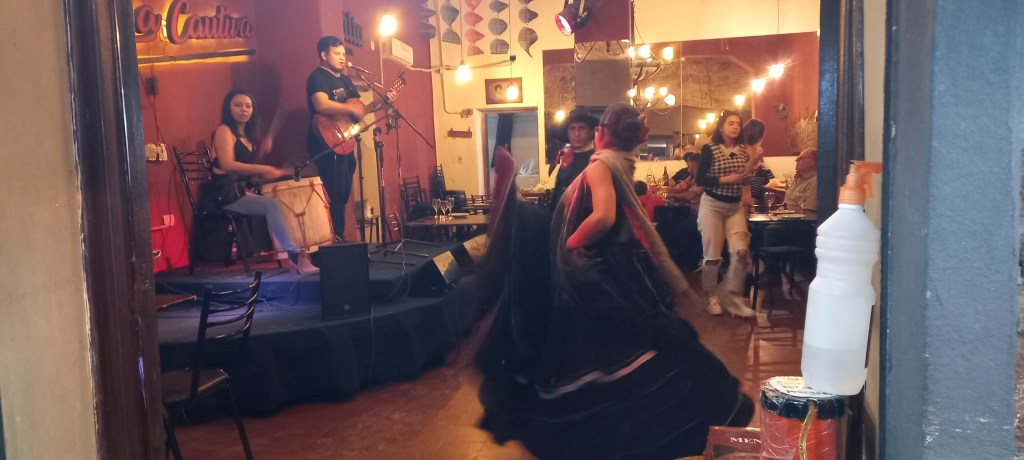
Corn in the Market, SaltaTraditional Dancers in a Pena, SaltaJasmine plant with flowers, SaltaTired feetNorthwest Trees, Salta window decorations depict the changing of the seasons,Salta
Recommended Tourist Activities in and around Salta
Try out an empanada made with llama meat
2. Ride the cable car to San Bernardo Hill for a panoramic view of Salta City
Located at the eastern foothills of the Andes, Mendoza is the fourth largest city in Argentina. It is known worldwide for its extensive vineyards, love of wines and amazingly sunny days. There are numerous wines consumed by Mendocinos however, those made from Malbec and Cabernet Sauvignon are the most renowned and popular. Cabernet Franc is also rising in its popularity. Malbec a is a dark inky grape variety which is widely consumed with the quintessential Argentine asado.
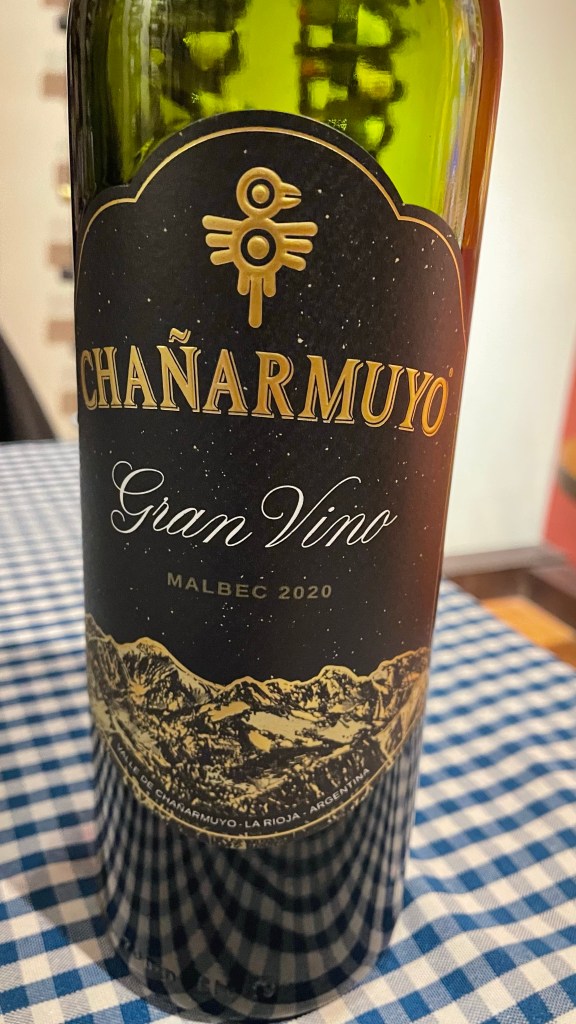
A sampling of Malbec offerings . See Gobar and Cache Bistro for a great selection in town
Mendoza favorite is Malbec wine, ready to complement the ever present asado.
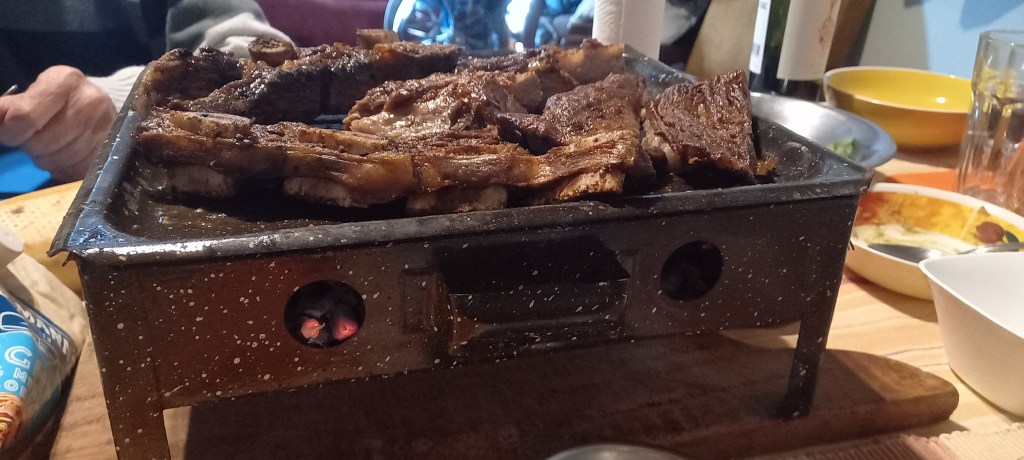
The core dish of asado is grilled meats, lots of it. This is a barbeque experience that you will find at its highest expression in Argentina. Sundays are dedicated to asados. Local families get together for hours to prepare and enjoy a variety of local foods. Asado involves more than a few pieces of grilled beef. We are told the calculation for beef is half a kilo per person. Usually, it begins with grilled provolone cheese, morcillas (blood sausages), empanadas-a turnover like dish made with a flour dough and a juicy stuffing of meat, cheese, onions, or vegetables. The preparation of asado is a valuable and almost sacred activity in Mendoza and all over the country. You can sometimes find three or four generations enjoying an evening conversations over this meal. Politics is openly discussed during this time so be prepared for the passionate and sometimes heated conversations that can occur.
The afternoon runs from asado to merienda, or afternoon tea. The conversation lingers and you find yourself drinking mate, tea or coffee with pastries into the early evening. Sometimes you will go home with some of the meat from lunch, for a light dinner!.
Wines are liberally consumed by the adults as the children delight in drinking cups of sodas mainly (Coca Cola and Fanta). Pastries, ice-cream, coffee, and tea are often consumed before the meal ends. Another favorite is the shared drink of Mate. Mate is a mixture of local herbs prepared by pouring hot water over the herbs in a special container. The hot drink is served directly from the container with a metal straw and passed around to each person for a sip.
Empanadas serving to compliments the asado but is also eaten as a snack
TIPS
When visiting Mendoza, if you are invited to an asado eat only a light breakfast. Go prepared to spend several hours eating, drinking and talking, bring a desert to share, ice-cream is lavishly consumed by all. For a great dessert you can visit Reggi Gelato.
The Covid19 pandemic has changed many things for so many people. For my family, one of the most significant impact was placing premium value on quality time together and living in the moment. In 2021 when many families remained hunkered down at home, my husband and I decided to travel. Everyone thought we were insane!
After the 2020 Christmas spent at home we visited NYC, Puerto Rico, Jamaica, Iceland and Spain. It was during our 15-day trip living in a small campervan that we made a few big decisions. This campervan had the basic necessities: a bed, heater, a cooler, a burner, and much appreciated privacy curtains. Our time was spent mostly outdoors, and we had one of the most amazing experience enjoying nature’s magnificence and the company of each other. While on the road, we were able to continue our work obligations without problems, which seemed the most natural thing to us once we had reliable Internet access. In Iceland, Wi-Fi connections are available in some camp grounds. However, its important to plan ahead, check to see if accommodations are available and choose the facilities that best meets your needs. We used camping.info initially to view the map of the camping locations, ratings and information about many different campsites you can go to https://utilegukortid.is/?lang=en. If you would like to experience Iceland in a camper remember that housing and food costs are high so I would recommend you consider including some prepackage foods for your trip.
Our #kukucamper, #wonderwoman. This was our home for 15 days.
The most important realization for us was that we do not need a lot of things to live a happy and fulfilling life. Though, this thought had crossed our minds previously, we were not able to make it happen, giving the complications we saw at the time.
Fast forward to 2022. Firstly, we are extremely thankful to have survived the pandemic. We have settled most of our commitments in the US. We have embraced a different mindset about life. Now we begin a new journey as nomads, nuevo (new) nomads. we invite you to explore with us different cultures, foods, unique customs and different ways of living. We will provide tips and tricks to make your own trips memorable and enjoyable.
We appreciate your time here with us to share in this new experience. Until next time.



















 Nuevo Nomads
.JPG)