Salta is the land of General Martin Guemes. His statue overlooks the city from the foothills of San Bernardo, which can be reached by car, walking or cable car.
The province of Salta has a variety of landscapes, climates, and people. From the yungas (forests) to the Andes mountains, you can find several different landscapes within a few hours’ drive.
After a few days in Salta city, with its wonderful squares, churches, and lively atmosphere, we set out on a drive south to Rosario de la Frontera, a town that feels like it is at the frontier.
The main activity in the area is cattle ranching, with some grain being grown during the rainy season.
El Sunchal and La Yunga, Salta

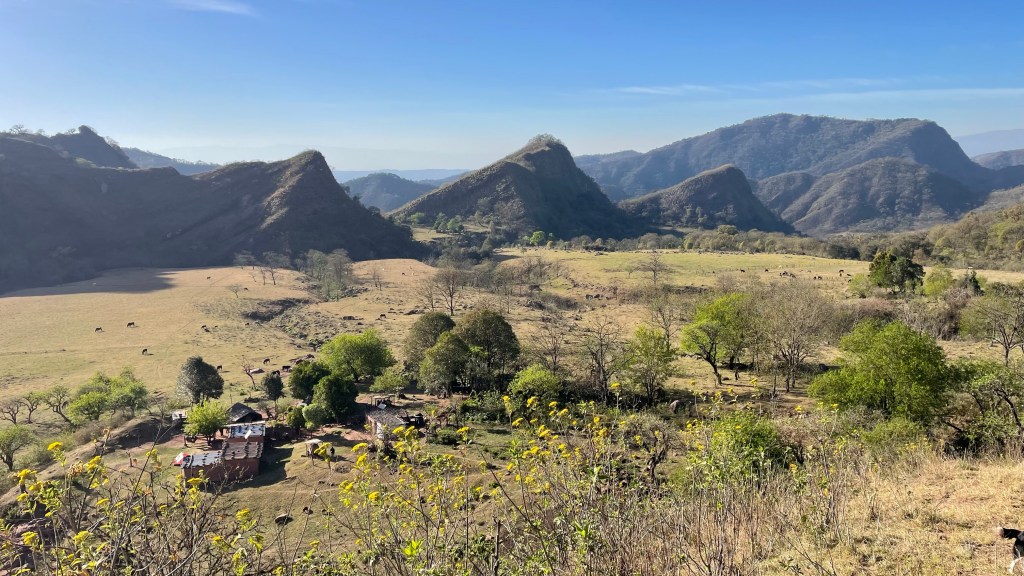


After we met our guide, we drive for over an hour to the trailhead, where we met Ignacio, one of our hosts. Ignacio loaded our gear on a horse, and we set out on our walk.
We walked into the yunga, an amazing ecosystem with many different trees, huge ferns, and calming air. We walked for hours, following a well-worn trail that is used by the people that live in the area. These people are part of the Diaguitas tribe who settled in the area in the 1800s, seeking peace and quiet.
After 4 hours and 10 km (about 6 miles), we arrived at our destination: El Sunchal. This settlement is home to a few families, part of the Sulca family.
Our hosts, Jesus, Chacho, and Ignacio, were ready for us, with the kettle full of water, and the fire roaring. They live in a place that could be in a picture book, with streams, pasture, and open skies. It is hard to describe the peace that surrounds the place.
We hiked to a waterfall the next day, an all-day adventure that took us through different ecosystems, from forest to riverside to deep canyons.
And then, that night, the moon showed us that new weather was coming. We got hit by a massive windstorm, a hot wind called Zonda. This wind threatened to collapse our tent and gave us no respite for the whole night and the next morning. You could hear it coming like a freight train, and it will hit us and blow in the sides of the tent.
We walked out, another 10 km. Our reward was a stop at Las Termas de Rosario, a hot springs resort founded in 1880. This resort has 9 different thermal waters, giving us a unique chance to soak our tired bodies for a bit. After a mandatory blood pressure check (never had to do that before going into a hot spring), we were taken to a tiny, private bath with 5 pipes, each with a different temperature of water. Each turn is for 15 minutes of soaking, then 15 minutes of resting. I thought it would not be enough, but after 10 minutes I was melting, it was so warm and intense, totally worth it.
We set out on a 3+ hour drive to our next destination: Tafi del Valle in Tucuman. To get there, we had to drive south to the capital city of Tucuman, then headed west into Tafi.
There was a long drive into the mountains, crossing from the plains into the lush hills, turn after long turn in the dark. We saw a sea of lights, spread out in front of us.
At last, we arrived in Tafi.
Tafi Tucuman
Tafi is a small tourist town, encircled by mountains with a dam in its backyard. The air was cold and hazy after the big Zonda storm.
We followed the recommendation of Leonardo, a Brazilian travel guide we met in Salta, and went for lunch to Wasi Kusi. Adrian, the host and owner, took care of us with great food and recommendations for places to visit and stay.
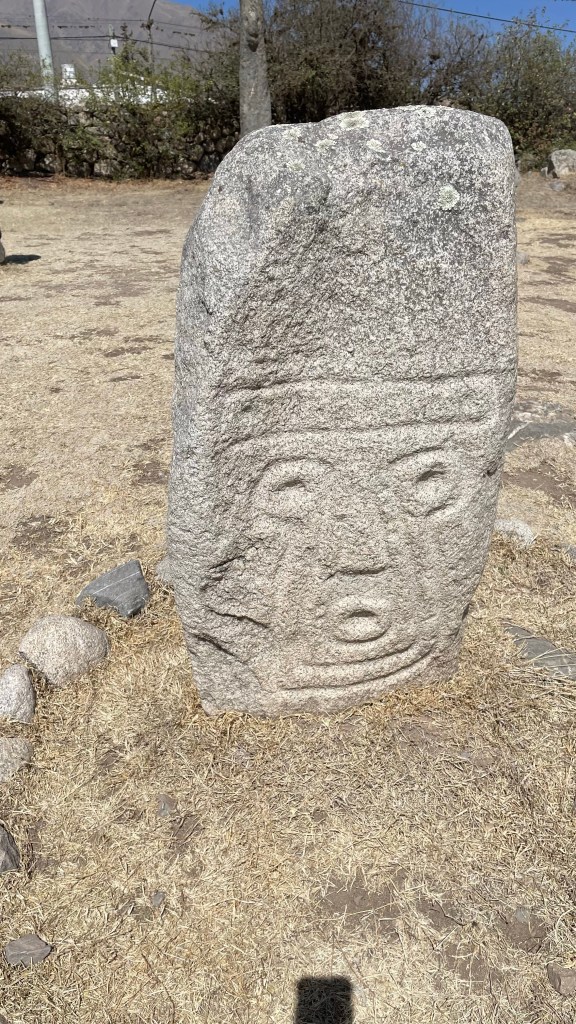
We visited the archeological site of Los Menhires in El Mollar, and the Los Alisos waterfall in El Rincon. We highly recommend a visit to both.



Museo Pachamama, Amaicha del Valle, Salta
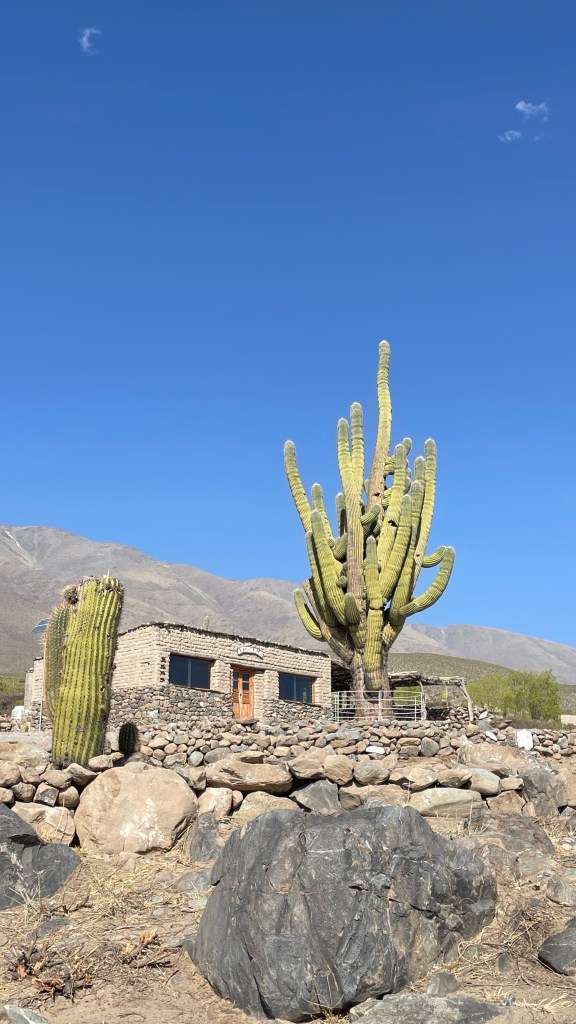
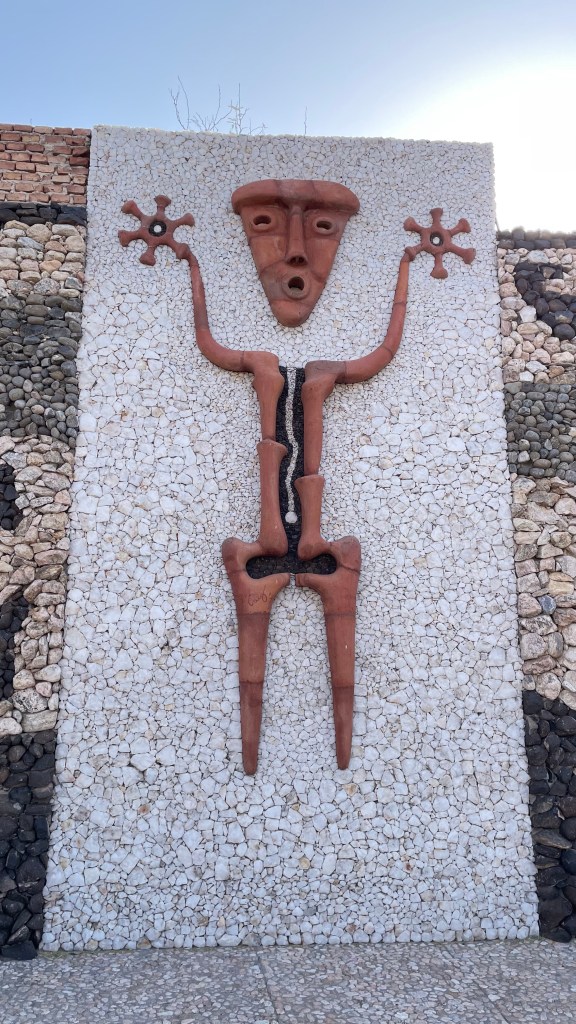
Wow! This is such an unexpected find. We had to stop. It was well worth it. So many works of art by Hector Cruz with local stones and other materials highlight key elements of Pachamama, the Goddess of the Earth and related deities, Inti (Sun) and Quilla (Moon).


Cafayate, Salta
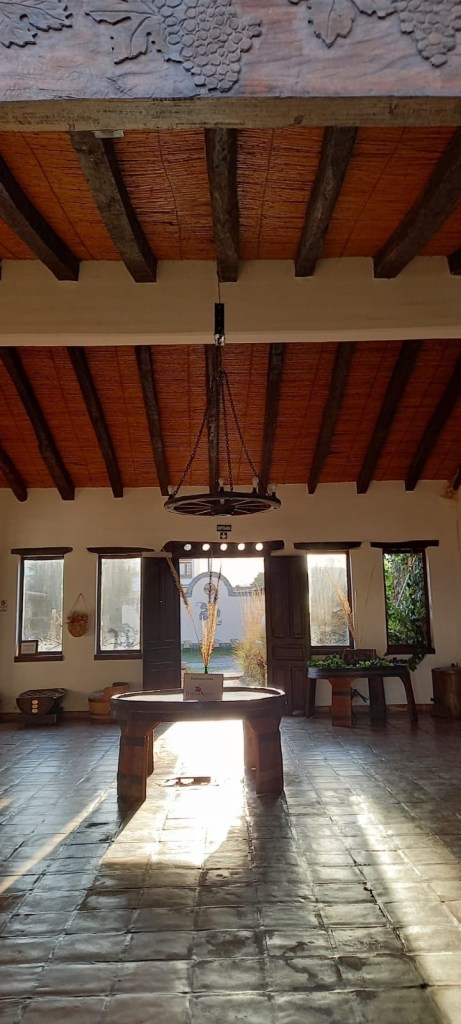
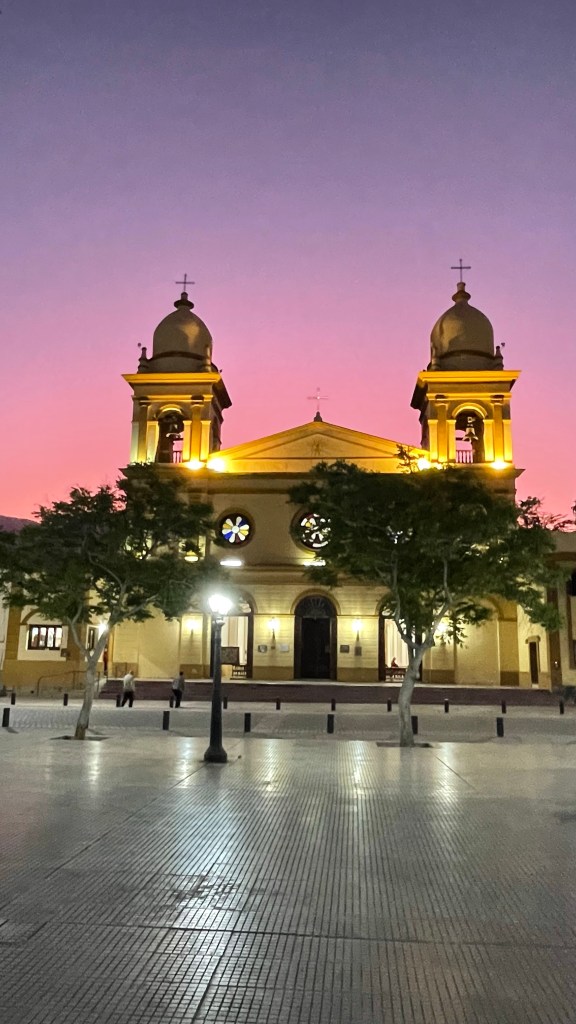
A couple hours’ drive from Amaicha del Valle, on route 40, we arrived in Cafayate, the heart of the wine country in Salta. This small town is lively, with a beautiful central square, surrounded by restaurants, bars, and an imposing church.
We visited a couple of wineries by walking from our excellent hotel, Portal del Santo. Damian and Cristian hosted us at Portal, and treated us like family, with a clean and warm room and a delicious breakfast.


Route 68: Los Colorados, Amphiteather, and Devils’ throat
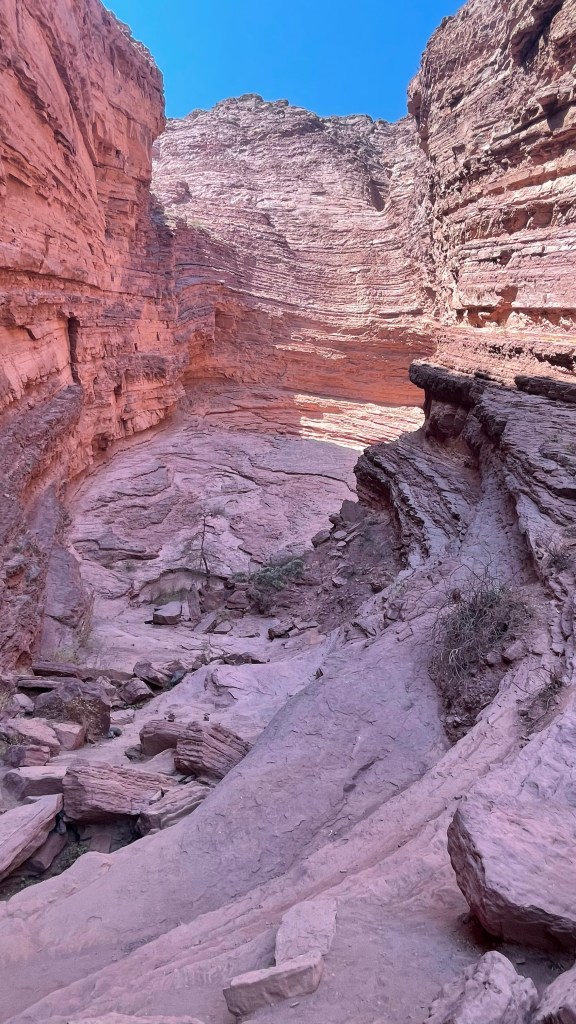
Leaving Cafayate, we took scenic Route 68 to head north. This road is a collection of landscapes, with soaring mountains, carved-out valleys, and a river that brings greens to the midst of towering mountains.
There are three stops that are a must, easy to access, and well worth it.


Walk good.
 Nuevo Nomads